Engineers are excited to announce upgrades for the new Neidon Rocket Launch System – the Neidon II!
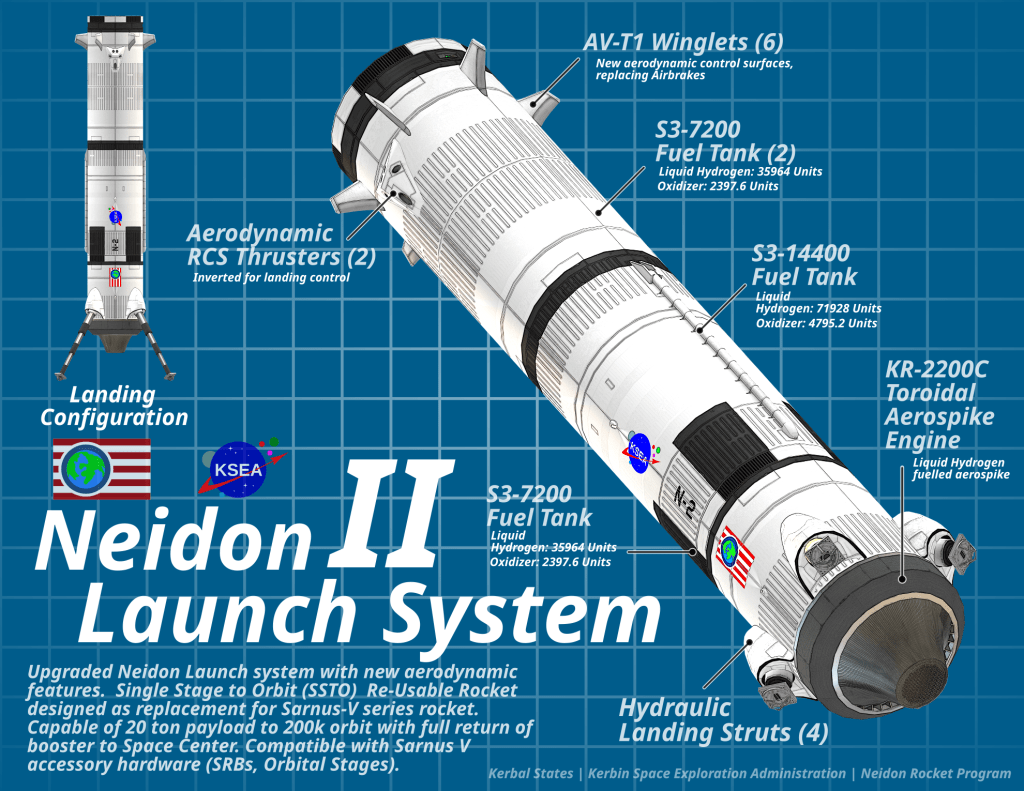
While the core rocket booster remains unchanged, several important changes have been made:
Aerodynamic Brakes have been removed
New AV-T1 Winglets have been added to deal with minor instability that occurs during transition from supersonic to subsonic.
Analysis showed that the shape of the RCS boosters at the top of the rocket was better served being flipped, so RCS thruster assemblies were inverted.
Rocket numbering changed from “X” to “N” – in blueprint shown as “N-2” for Neidon Booster 2.
Rockets have been given a fresh coat of paint, with flag and KSEA logos moved.
Besides structural changes, the Neidon Rocket will now have the bottom S3-7200 Fuel Tank prioritized as the “landing tank”. This will move the center of mass for the booster further to the bottom, assisting in re-entry!
“The plan is to test the booster with the upcoming MPV Probe, if everything is good we’ll upgrade the other boosters!” -Gillian, supervising upgrades at the VAB
With the upcoming launch of the new space station Spacedock 2, plans have been made to utilize the existing Lithium Fuel depot that survived the (original) Spacedock disaster! A Multi Payload Vehicle (MPV) has been configured to be a “Depot Mover” to grab the Lithum Tanks and move them to a lower orbit for the station!
“This should be a good test of the Neidon Rocket!” -Gene, at Mission Control
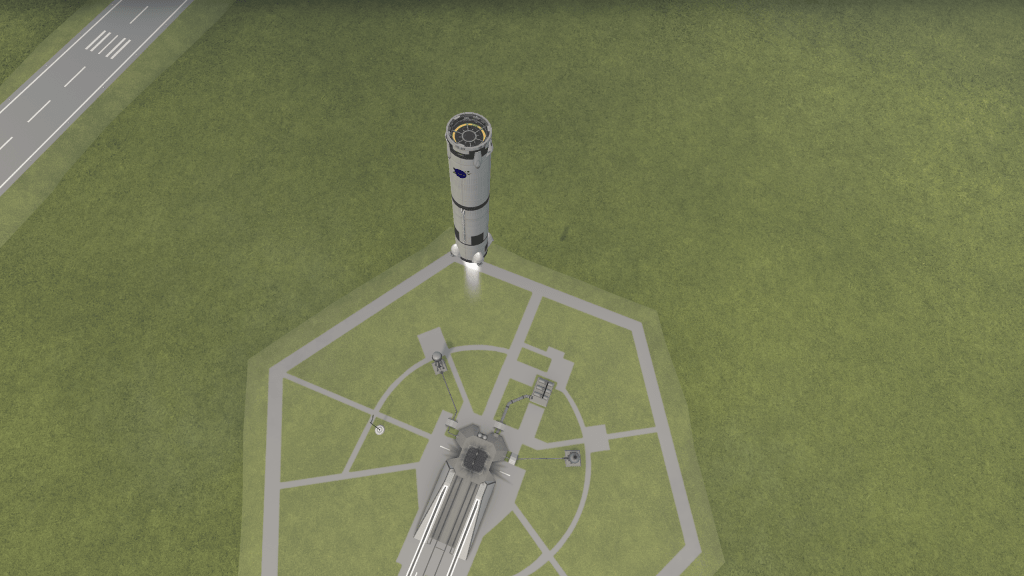
The Neidon Booster lifts off the launchpad!
The aerospike engine easily lifts the 20 ton payload up and out of the astmosphere…
…the fairing detaches, and the orbit is circularized!
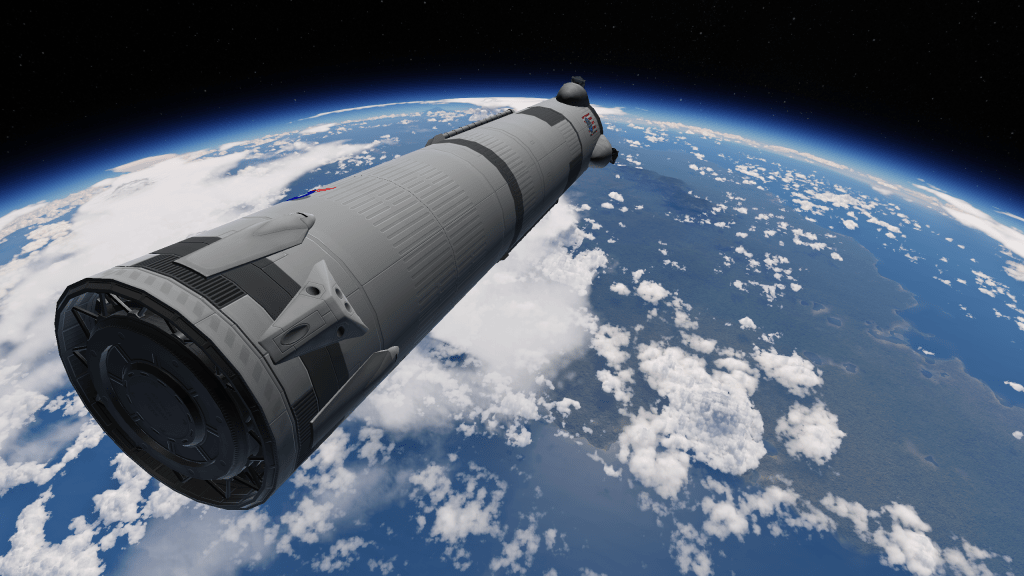
With the MPV in a stable orbit, the booster uses its RCS thrusters to get in position, and fires its engine!
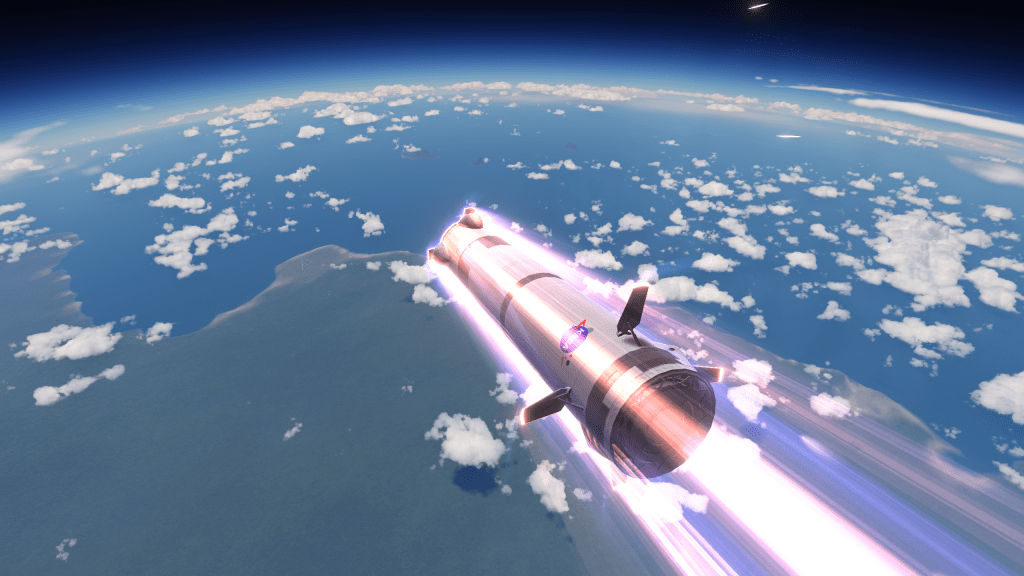
With the MPV in a stable orbit, the booster starts its descent!
“Hmm, reentry angle seems off, tracking is showing the booster landing a good deal west of the Space Center!” -Gillian, at Mission Control
“We’ll have to get some movers over there to pick it up… hope it doesn’t land on a tree! -Gene, at Mission Control
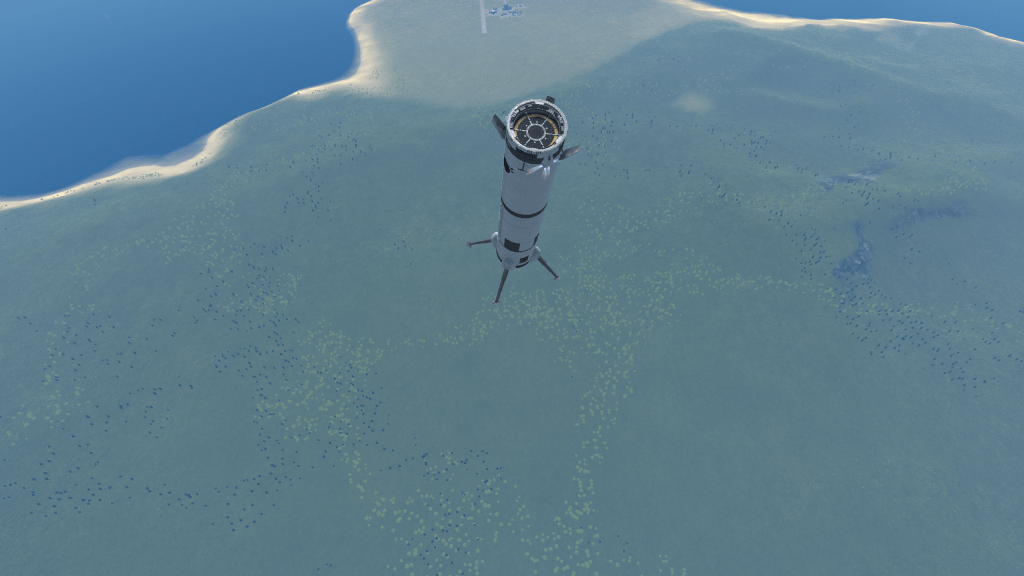
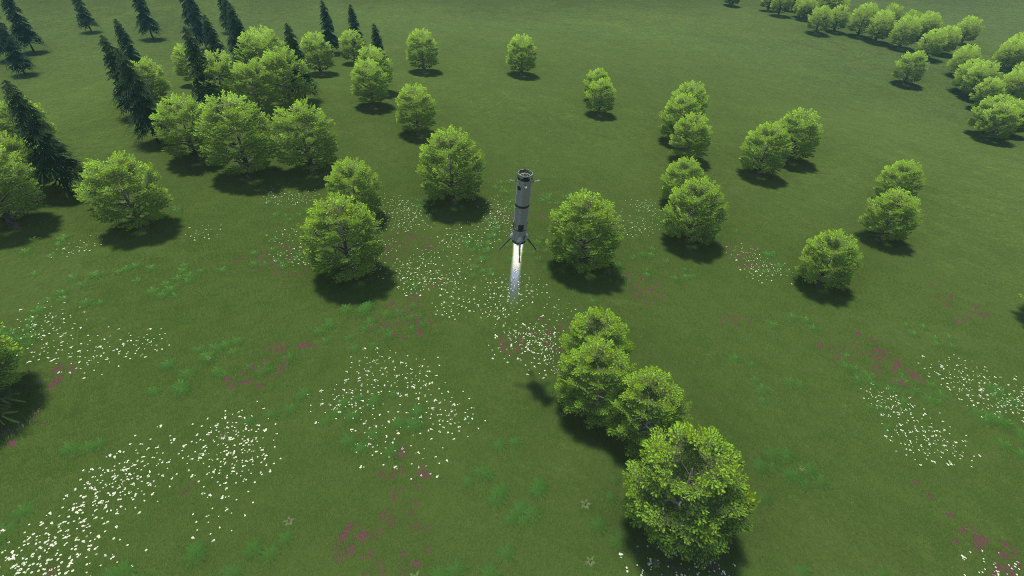
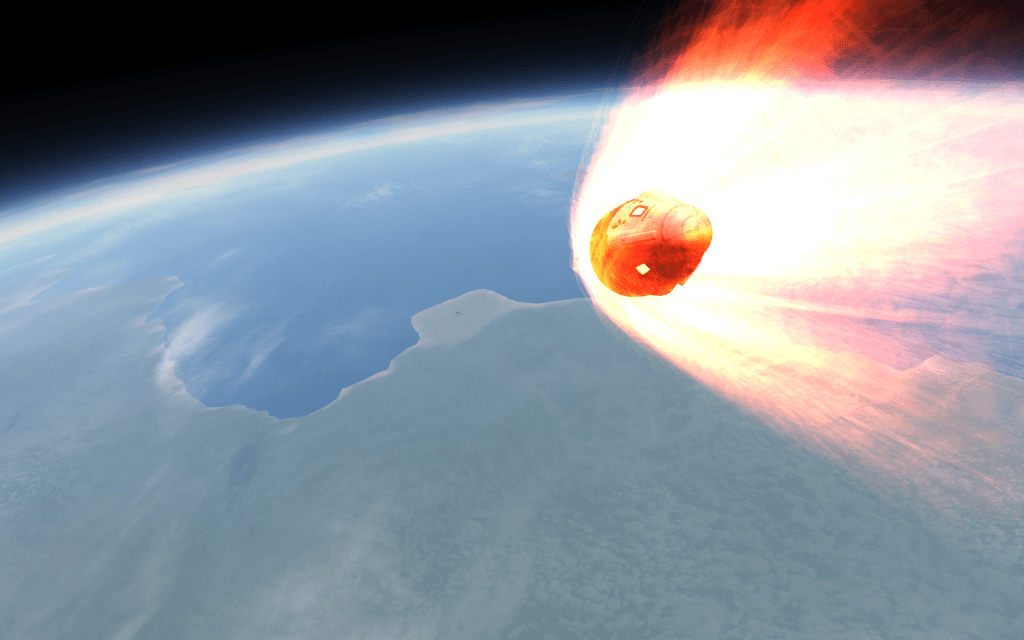
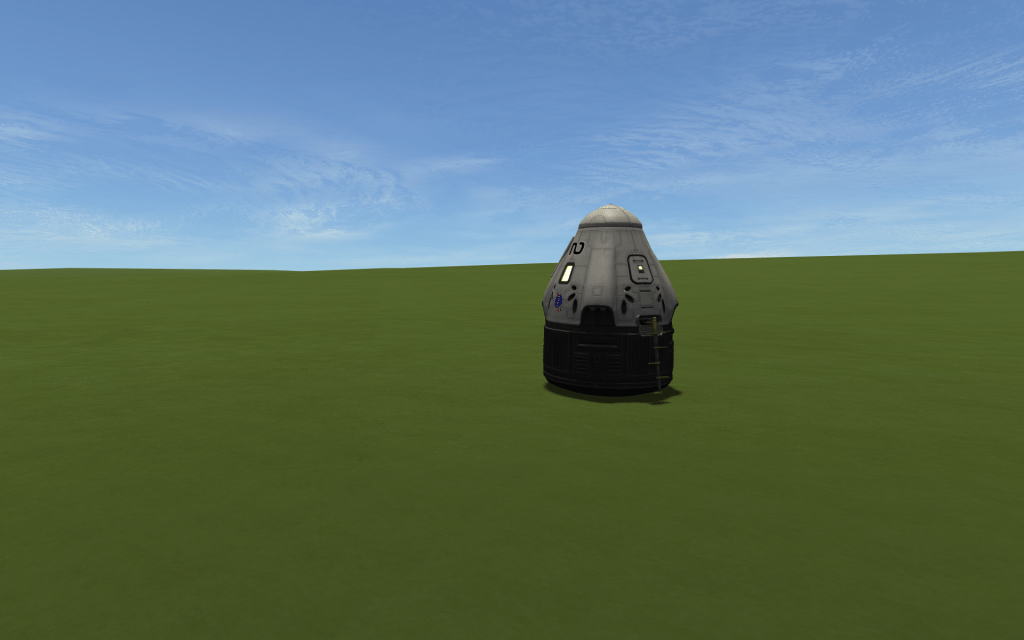
The booster’s hydraulic landing system engages, and the rocket sets down in the idyllic green woods outside the Space Center!
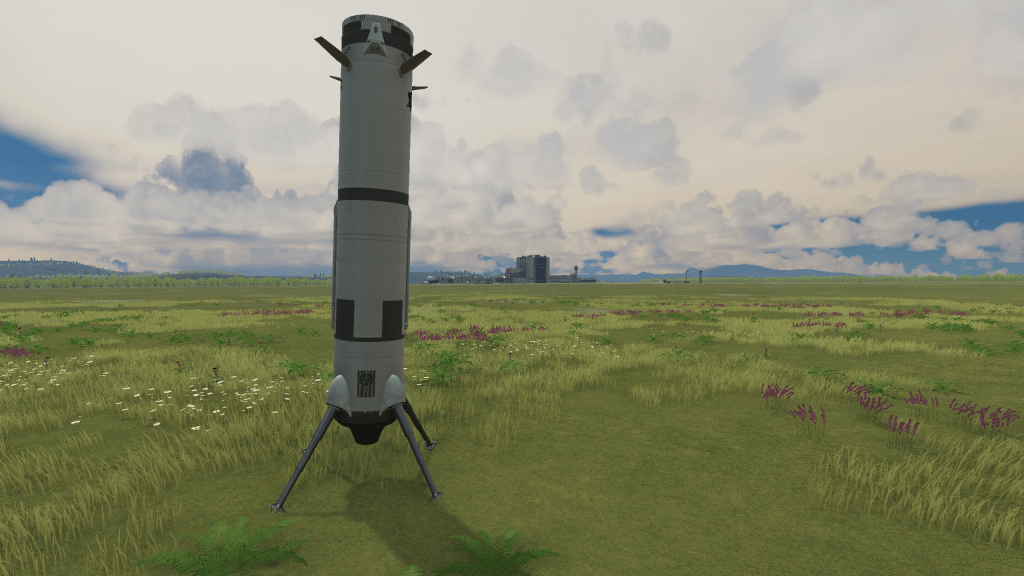
Touch down! The engine stops firing and the rocket is safe!
“Not quite where it should be… but it’s in one piece!” -Gillian, at Mission Control
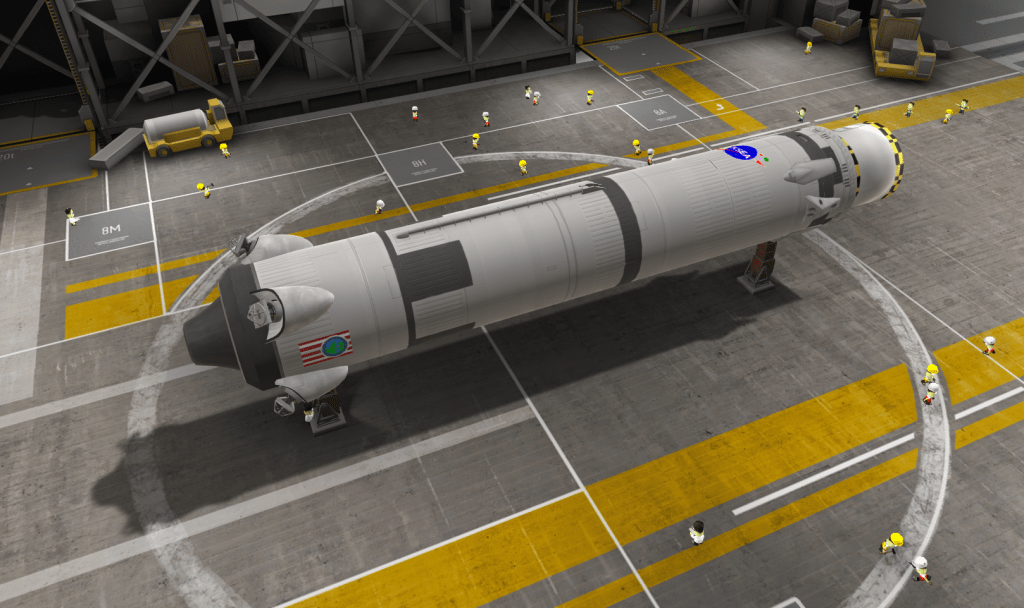
The new Neidon Prototype is transported to the launch site! Everyone is excited to see the new Aerospike engine perform! Smaller aerospikes are already used on the Laythe Spaceplanes, however they have never been a core rocket stage before!
In Mission Control, the project lead Gillian is working with Gene on testing this new hardware!
“Fire the engines! Nice… the toroidal aerospike is working! Fuel flow – nominal… I think we are good to release the clamps and proceed with the landing test!” –Gillian
The Neidon rocket blasts off the launchpad! The prototype is only fueled with what the ‘expected’ fuel amount would be from a return from orbit!
After angling off to the south a bit, the rocket is programmed to begin its descent sequence! Air-brakes at the top of the rocket deploy….
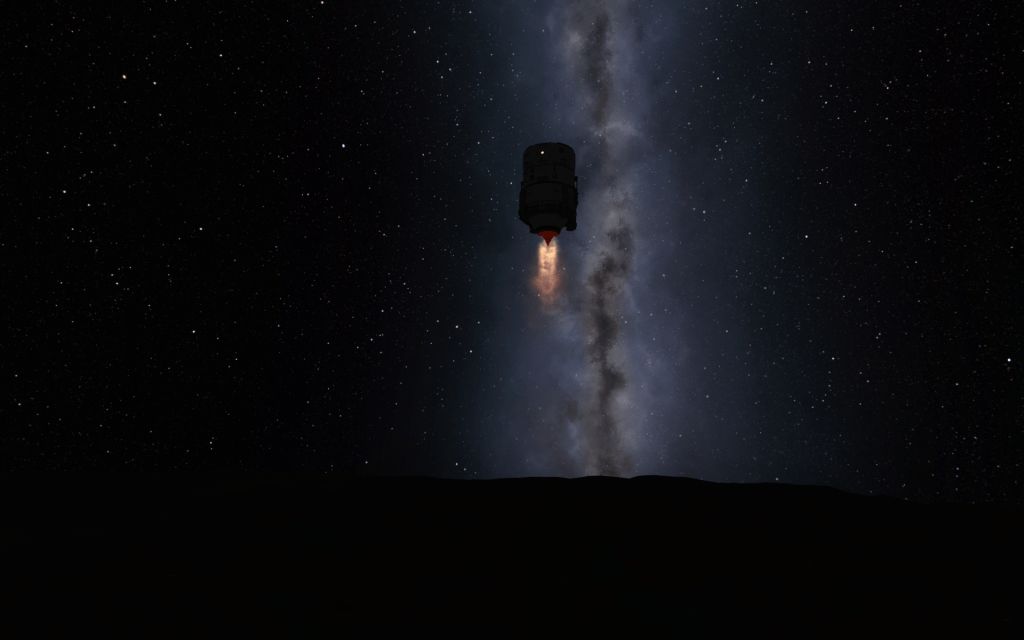
And at the last second, the engine performs a terminal burn maneuver, firing at the last possible moment!
The hydraulic landing gear deploy and lock in place…
…and the rocket touches down safely!
“It worked! It worked!” –Gillian
The Kerbals cheer in Mission Control, and Gene happily exclaims:
“Congratulations team! I think we are OK to go on producing the second Neidon and scheduling an upcoming orbital payload!” -Val
A new re-usable rocket prototype that will replace the current Sarnus V is under development in the VAB! The new rocket is designed to replace the Sarnus Rocket core that is used heavily in the space program!
Initially called the Sarnus VI, the project has now been determined to be such a radical shift from the Sarnus program that it deserves a new name, so the Neidon Rocket Project has several goals:
Meet or exceed current Sarnus Vb launch system (50t to 200k orbit)
Fully re-usable core rocket
Core rocket capable of single-stage to orbit of payload
Maintain compatibility with Sarnus Launch system upper stage payloads
Maintain compatibility with side stages and launch assists (solid rockets) for Sarnus Launch System.
Assess program for complete replacement of Nebula rocket system.
While the Nebula Heavy has taken some of those missions, operational complexity has made utilization a chore for Mission Control!
“That’s right – it’s finally time to retire the reliable Sarnus V! But don’t worry – you’re all going to really like the replacement. Trust me!” –Gene, answering questions at Mission Control
While the solid rocket boosters on the side of the Sarnus V (which is what makes it a Sarnus Va) are partially reusable, the center core (and most expensive component) of the Sarnus launch system is entirely lost.
A “would be nice” goal is to allow payload returns from orbit, something KSEA hasn’t been able to achieve since the Heavy Shuttles were retired.
“Maybe it’s satellite we need to bring back for repairs, or an interesting rock that won’t fit in any of our standard “rock collection” bags! Either way we’re gonna need some kind of cargo bay to protect whatever during reentry!” -Gillian
Construction on the prototype should be complete in 30 days!
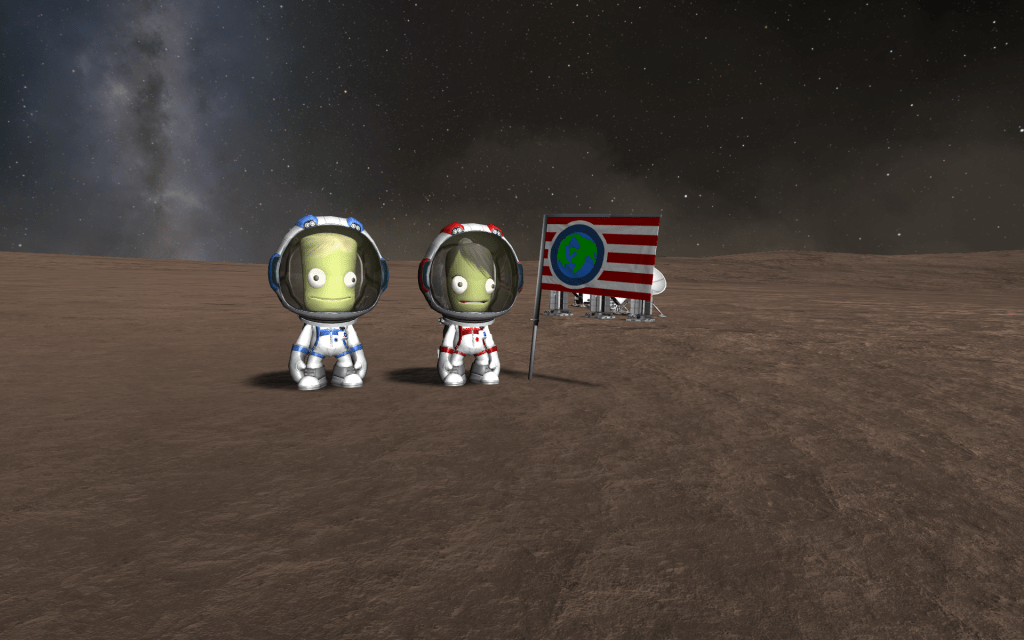
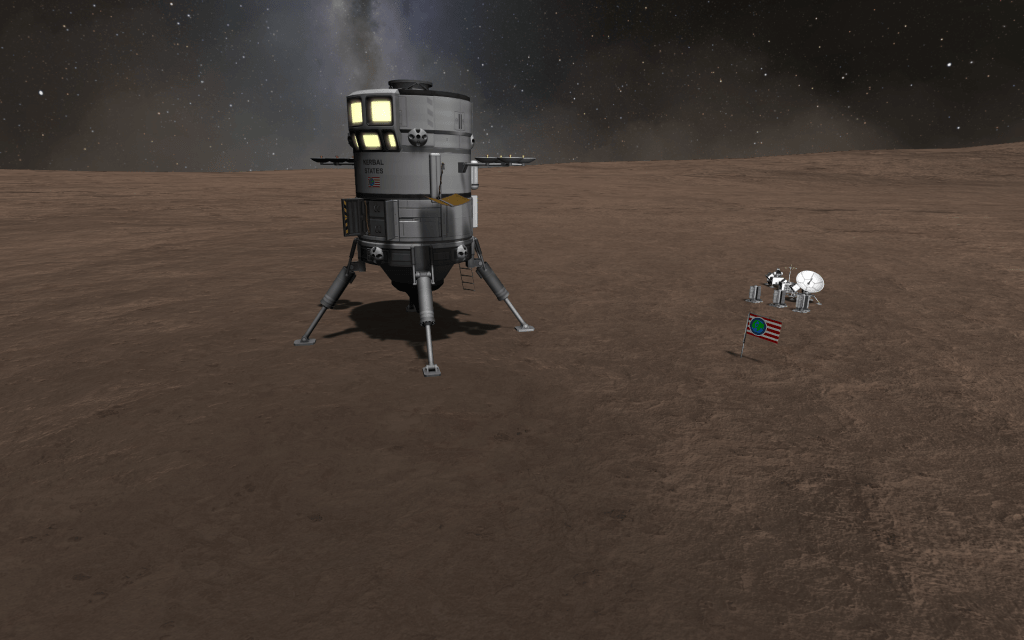
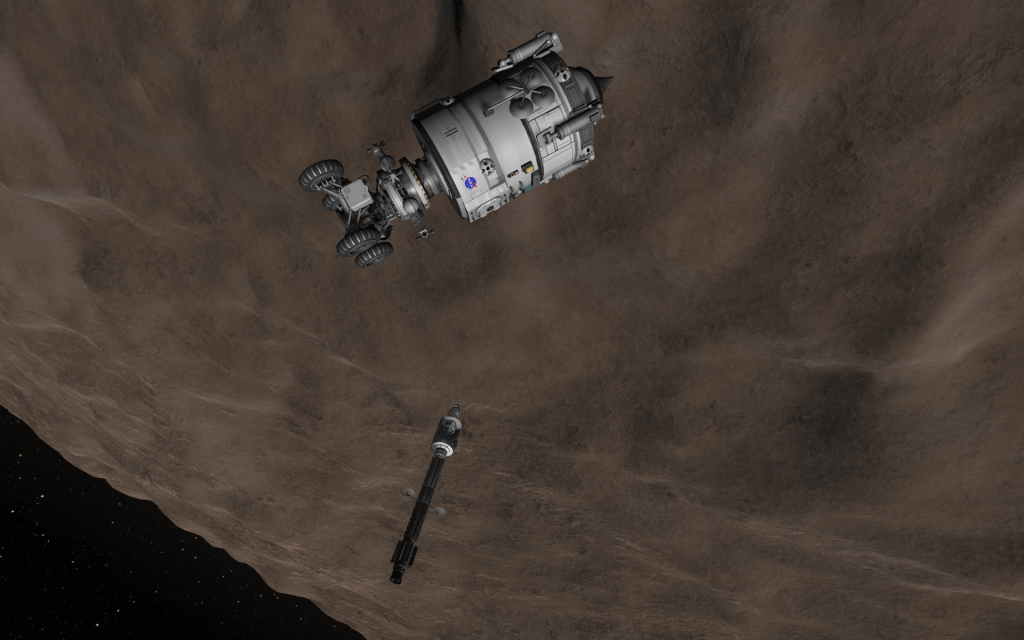
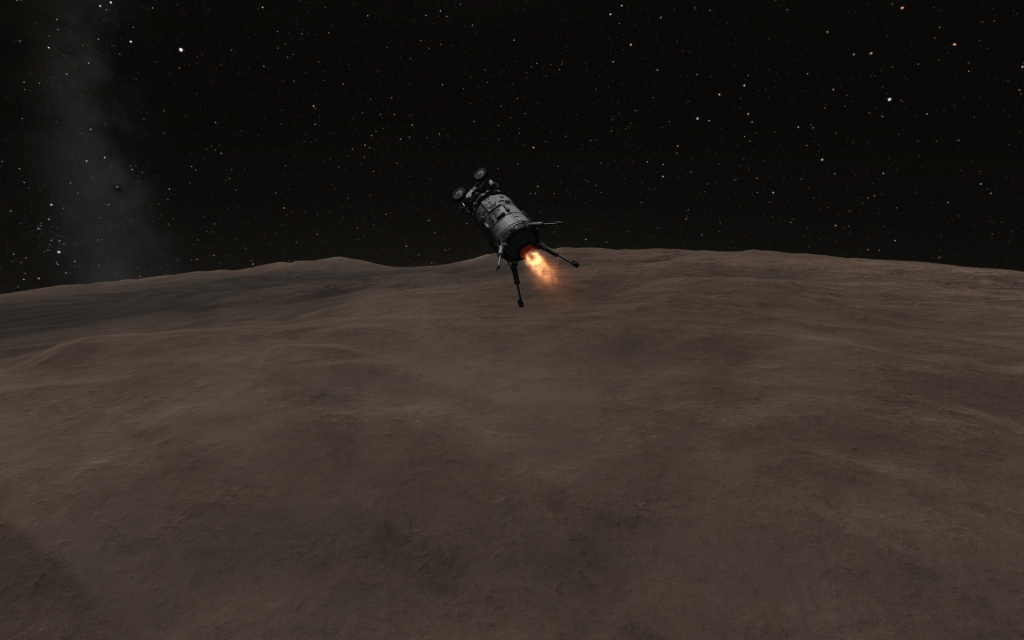
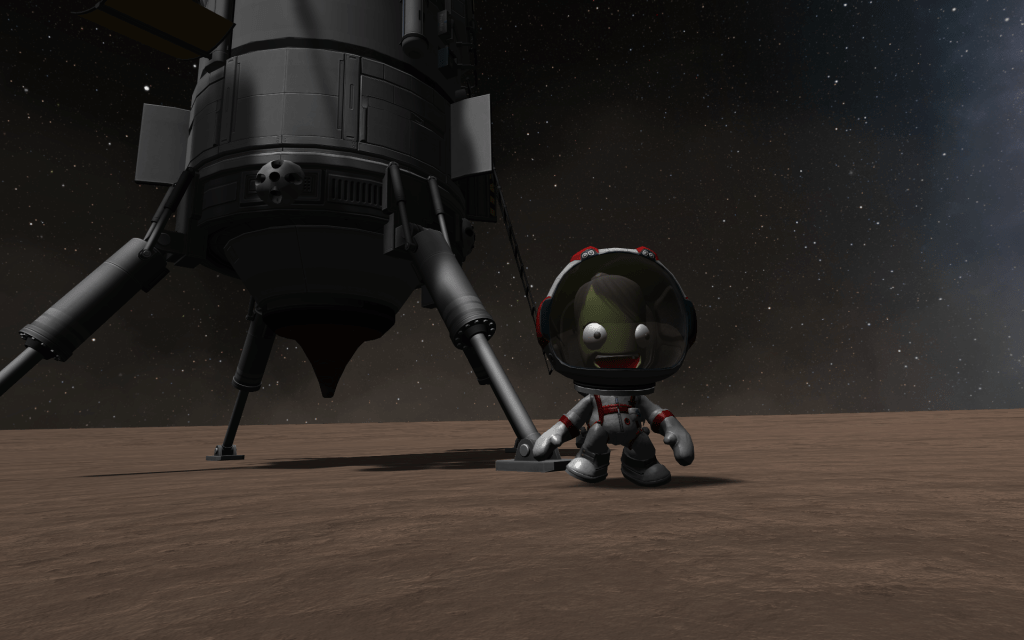
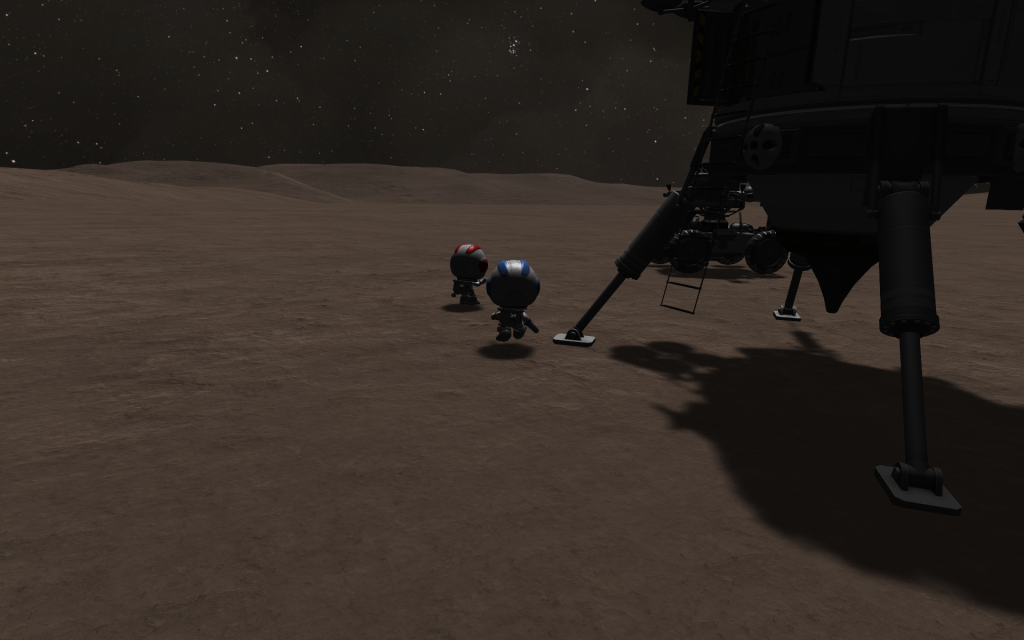
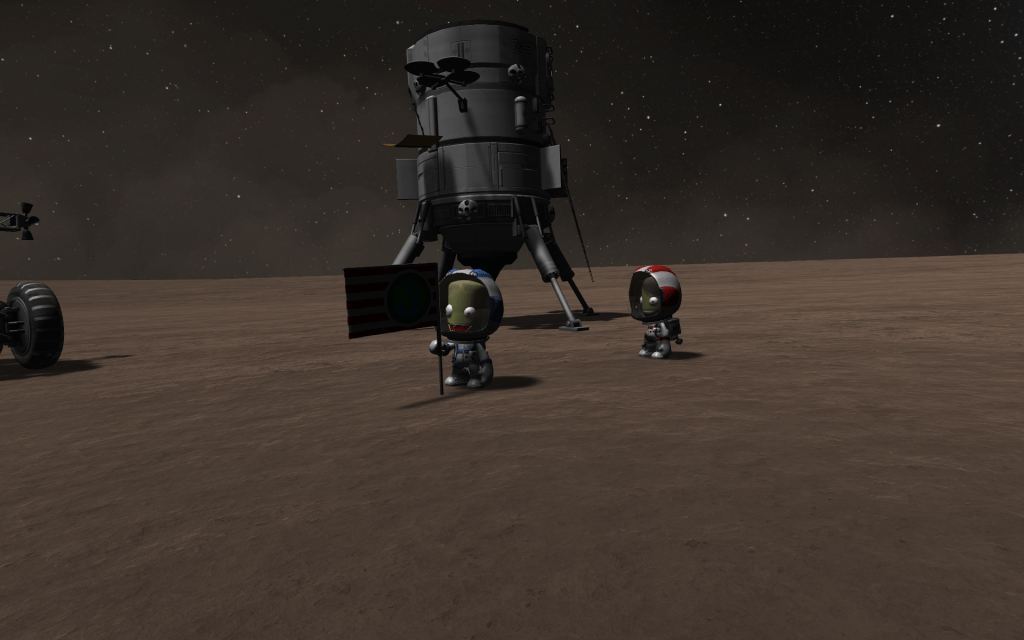
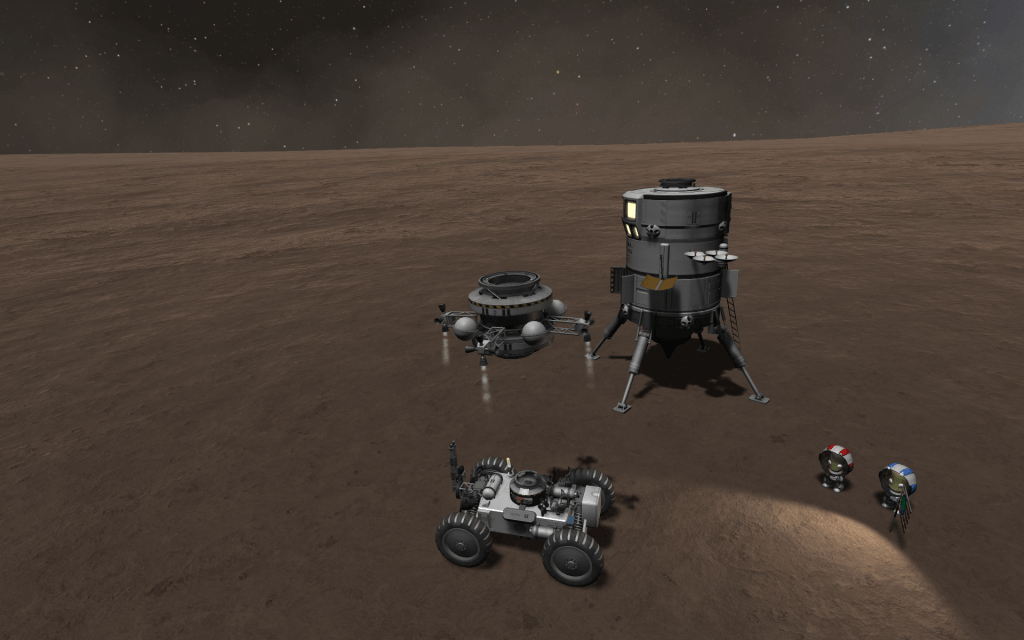
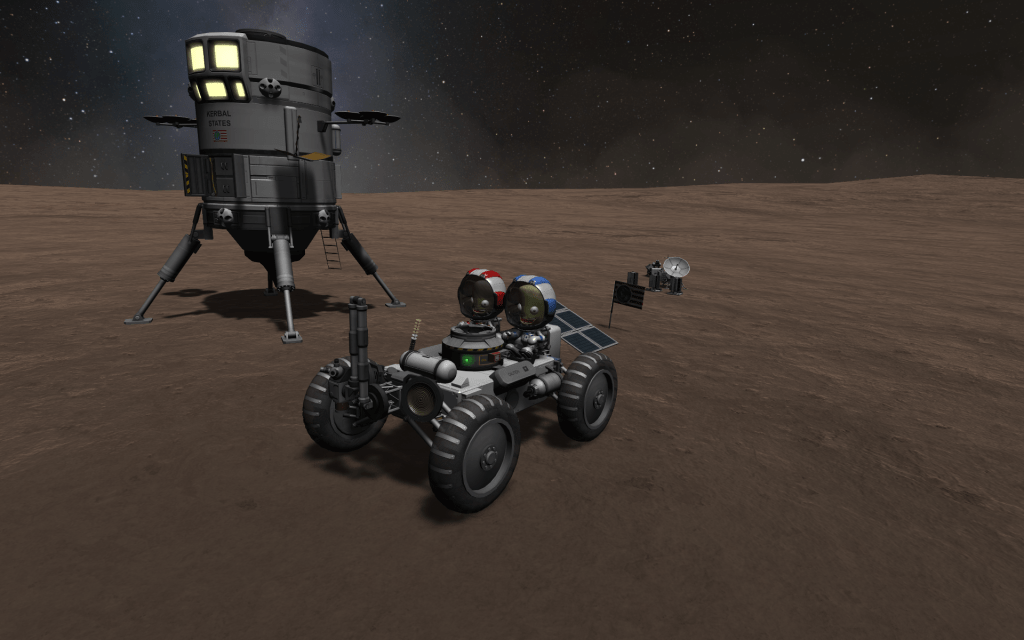
After camping out on Moho for 64 days (a record!) Mirphe and Samner blast off, leaving behind all the science gear and the rover!
“Systems nominal… fuel supply will be… well, a little tight!” -Mirphe
“What’s that mean!?” -Samner
“Well, as long as I don’t make any mistakes whatsoever we probably have enough fuel to rendezvous!” -Mirphe
“Probably!?” -Samner
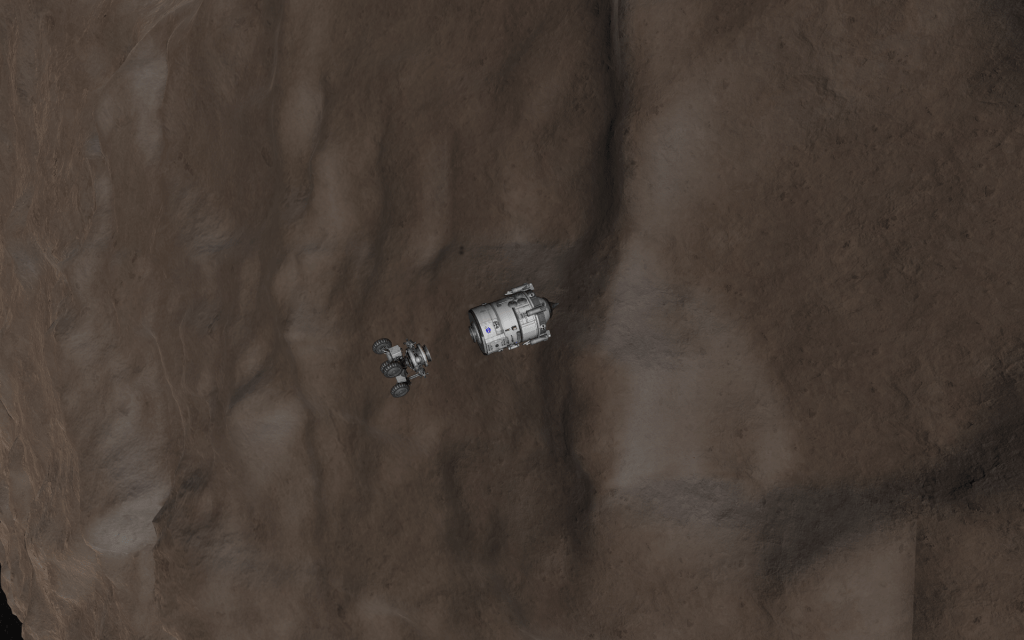
Thankfully, after reaching orbit there is *just* enough fuel to rendevous! The remaining fuel is a very low 12 d/v supply!
“Ok – we’re lined up … moving in to dock!” -Mirphe
“Welcome aboard! It was getting boring up here! Next time we visit we need to bring a lander that can fit everyone!” -Gillian
Samner stows all the scientific data and samples, while Gillian gets the reactor powered up!
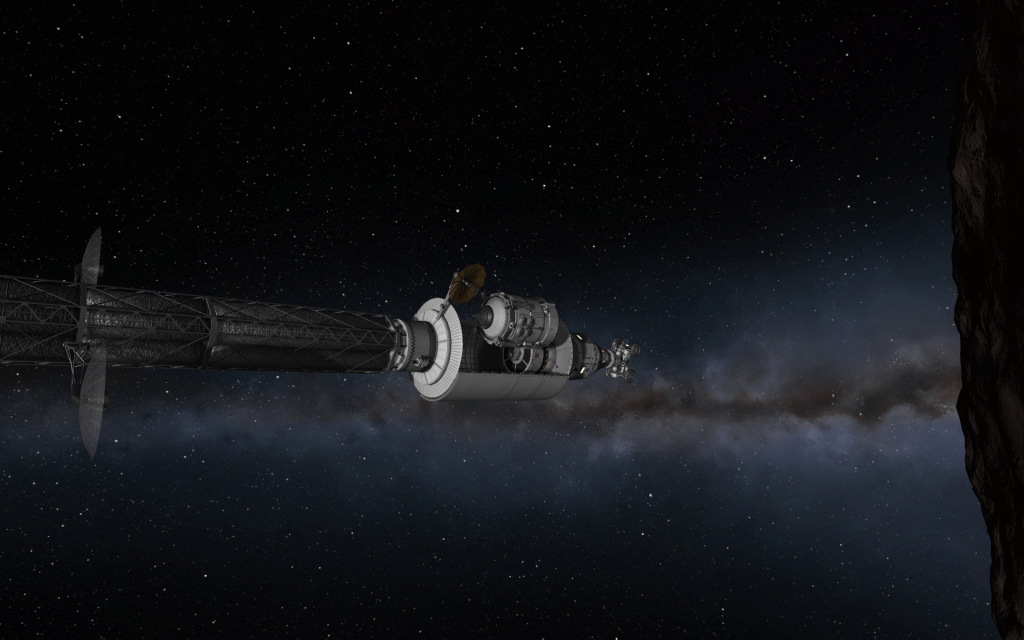
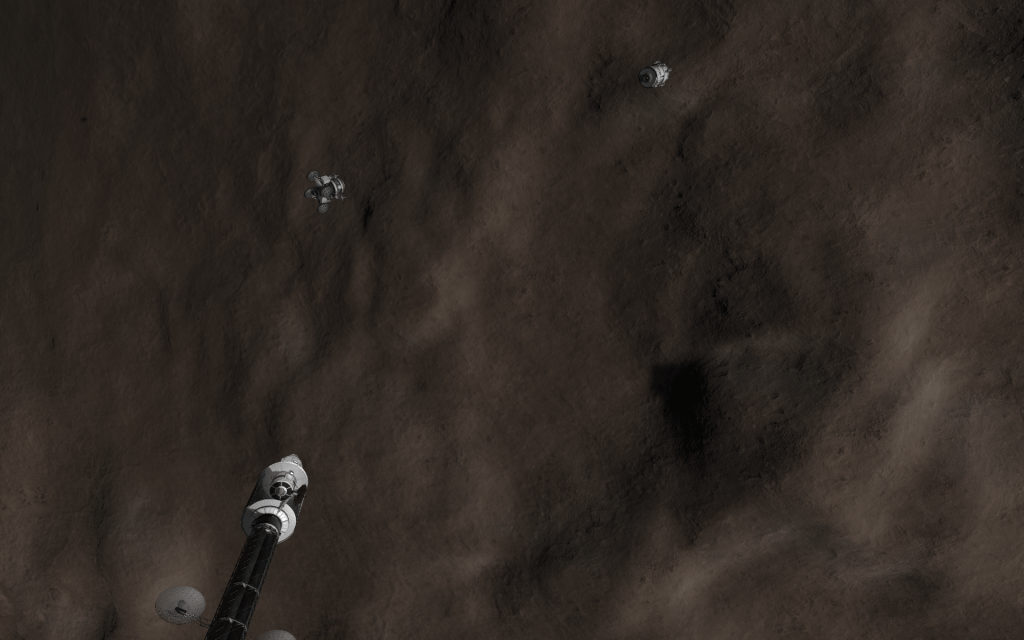
The lander is undocked, and drifts away from Endeavor!
“Course set! We’re ready to head home!” -Mirphe
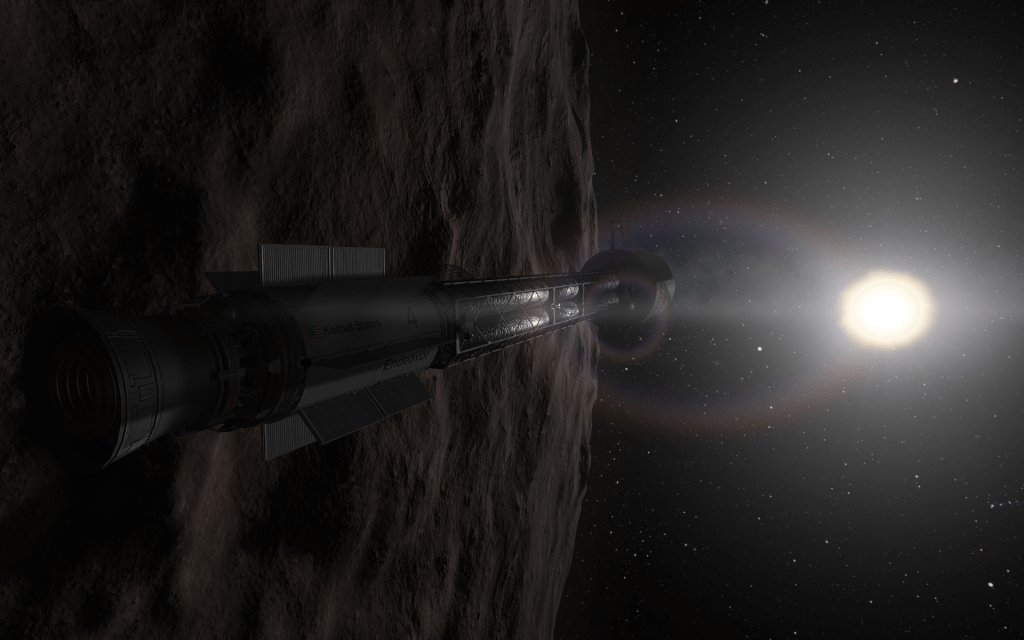
Endeavor powers up it’s nuclear engine and the spacecraft departs Moho!
The journey to Moho has taken much more fuel than initially planned – the lack of an atmosphere or any moons means very little natural assistance with slowing down!
Endeavor flies away from Moho, heading home!
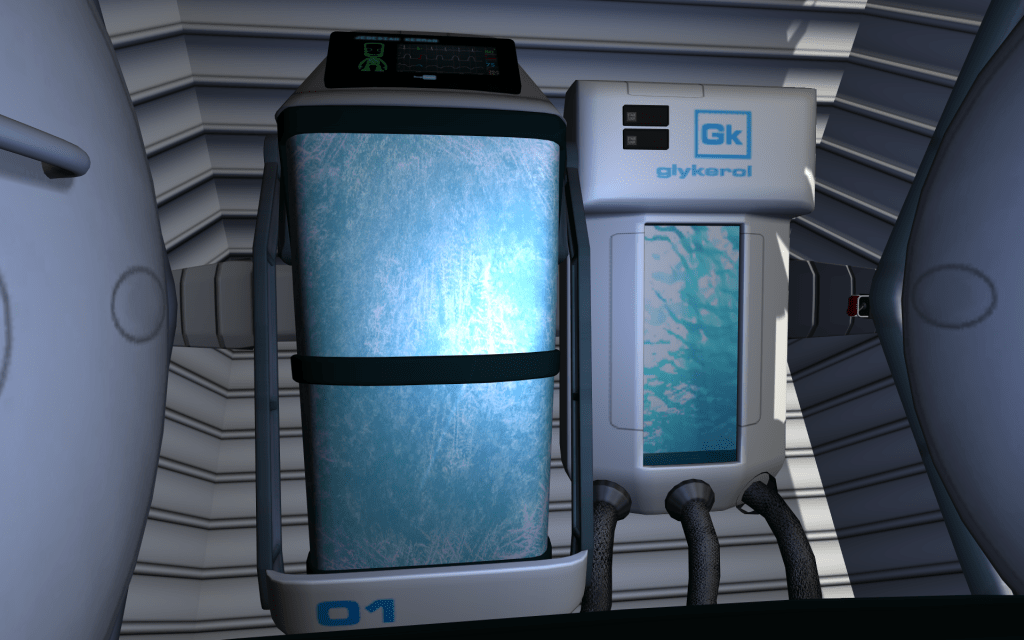
Meanwhile, the crew enters cryostasis!
“Mission Control… this is Mirphe on Endeavor! Samner and Gillian have successfully entered Cryo-Stasis.. handing over Vehicle to Mission Control! Endeavor Out!” -Mirphe
“See you soon Endeavor!” -Gene, at Mission Control
Endeavor arrives at Moho! The engines begin automatically firing to capture in orbit. Meanwhile, the crew is woken up from Cryo-Stasis!
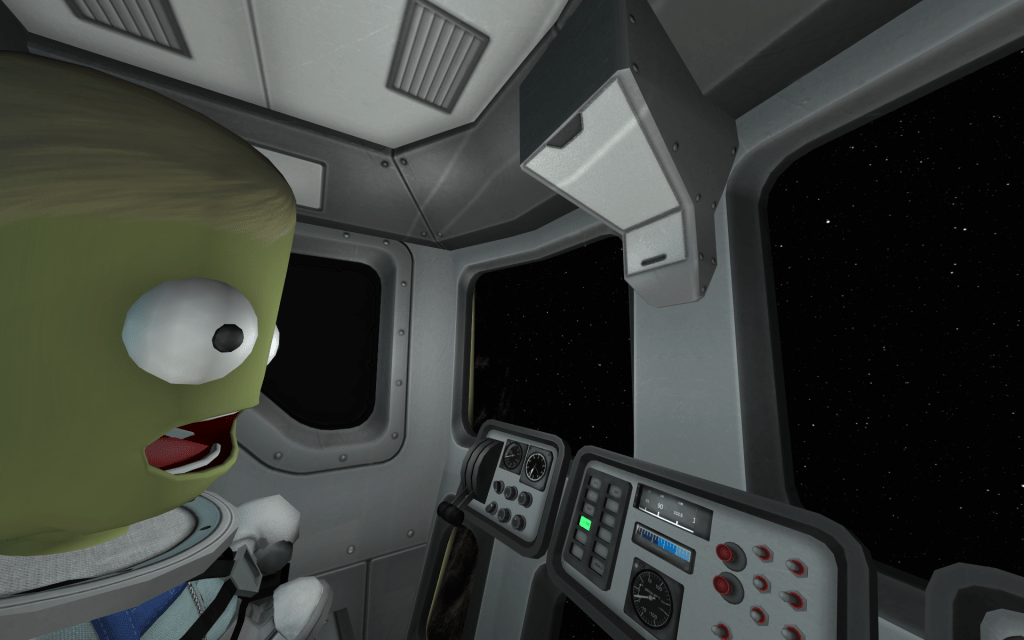
“Brrr! We must have arrived! I need to get to the command module, I hear the engines firing!” -Mirphe
Gillian and Samner wake up too, and start preparations for entering orbit!
The burn to capture orbit is nearly 15 minutes long!
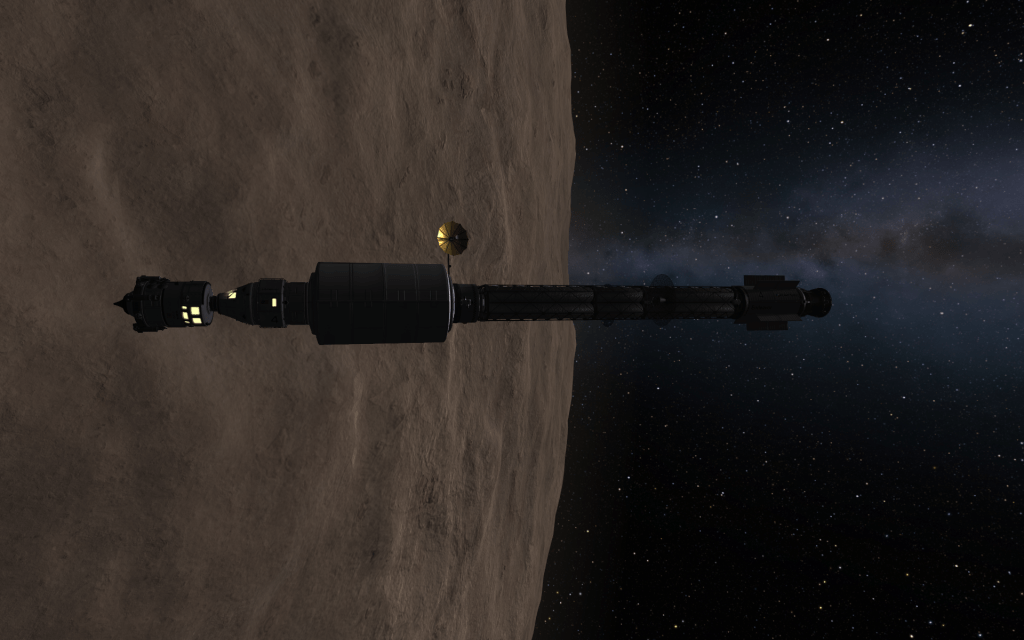
It takes a while, but eventually the final orbit is reached…
A very close 15k orbit above the surface! Another burn occurs to take Endeavor’s inclination closer to Moho’s equator – everything is being done to get as much deltaV out of the onboard lander as possible!
“Mission Control, this is Mirphe… Ideal orbit achieved! Endeavor preparing for crewed Moho Landing!” -Mirphe
Back at mission control, everyone cheers!
“Get some rest for the surface mission Endeavor!” -Gene, at Mission Control




























 Kerbal States | Kerbin Space Exploration Administration