A good crowd of Kerbals gather in Mission Control to watch the launch of Spacedock 2!
“Look at it go! It is so LOUD!” -Gillian, watching from outside
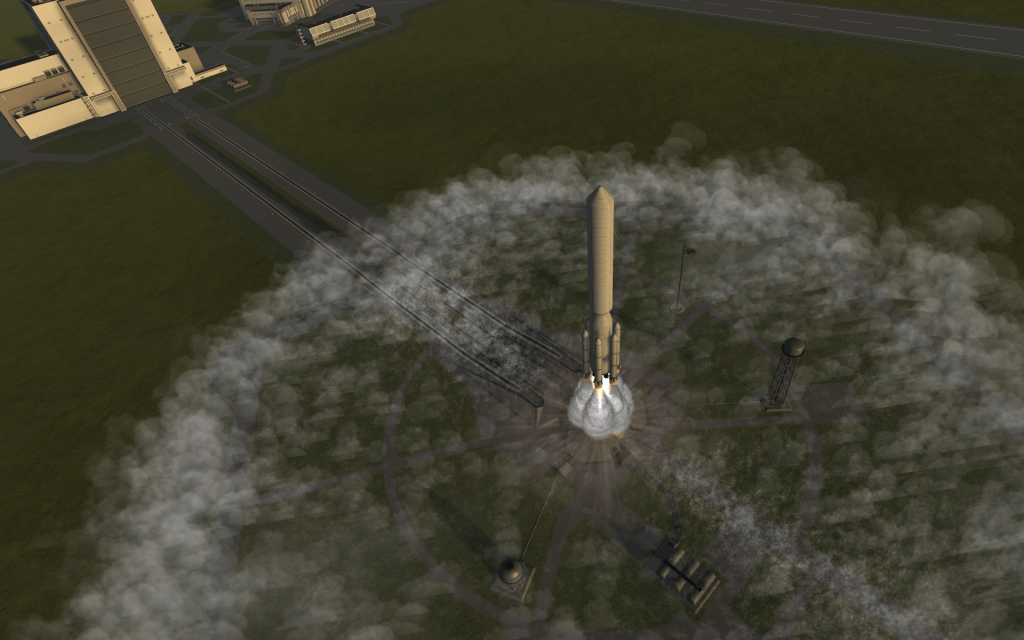
The massive Nova Rocket blasts off from Mission Control – the largest (and most expensive!) launch system available to KSEA!
“Boards show a good launch – all systems nominal… watch those readings people… “ -Gene, directing the launch from Mission Control
The first stage takes the rocket up to the Station’s new altitude,100k above Kerbin….
…then separates, allowing a short second stage to finish the circularization!
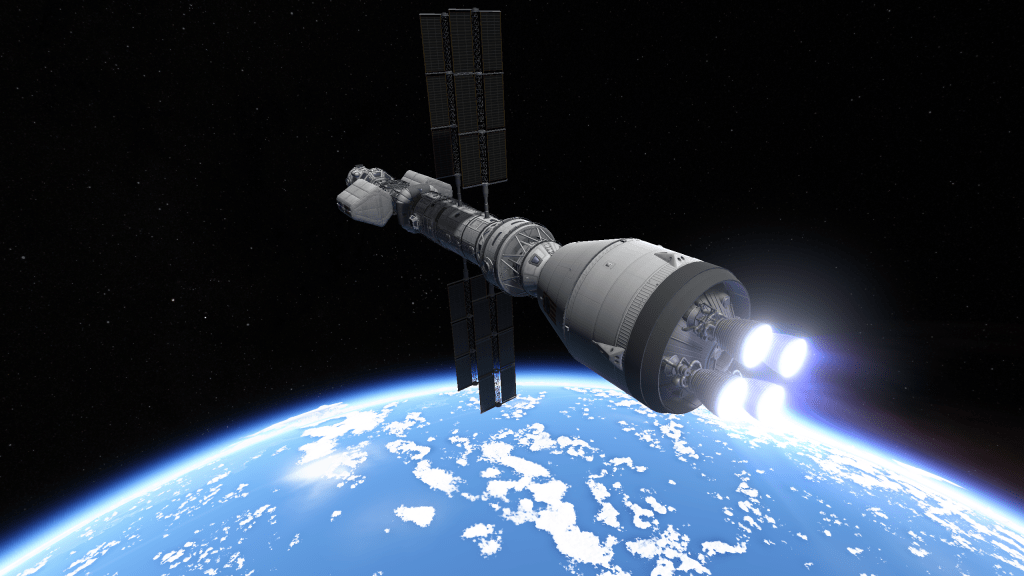
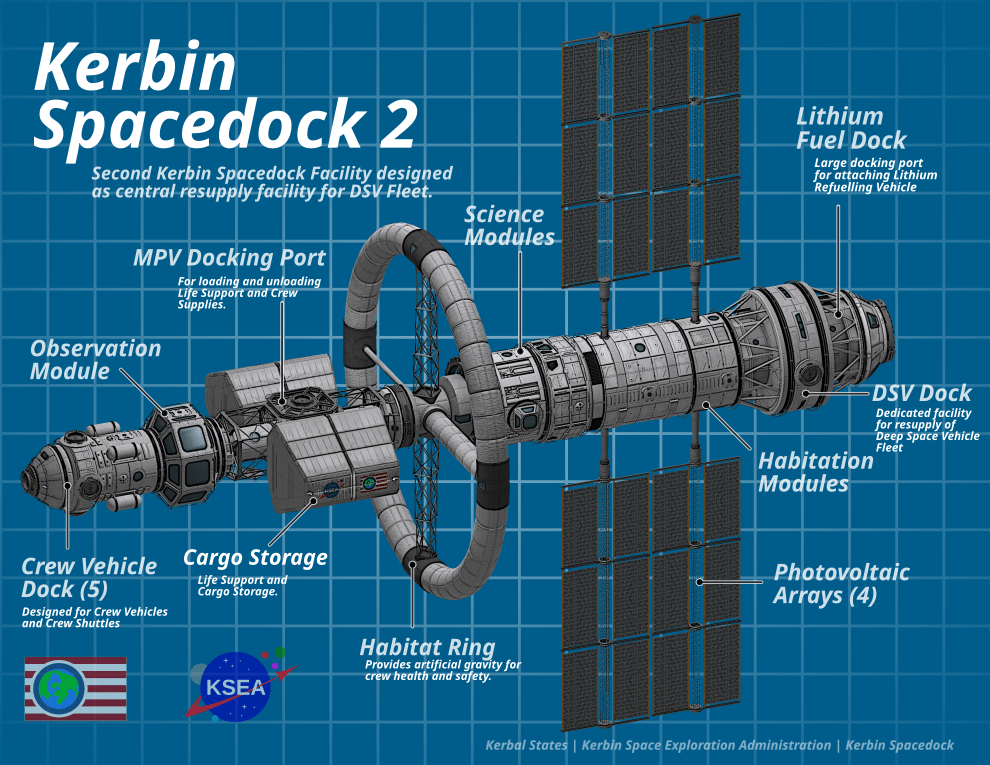
Spacedock 2 should be in its final orbit, however engineers want to wait before ejecting the orbital stage just in case there are any last minute changes to the station’s final orbit!
“Let’s get that launch pad cleaned up and get a Crew Vehicle ready to launch the first Spacedock 2 crew! Should be a good first crewed launch of a Neidon Rocket too! “ -Gene
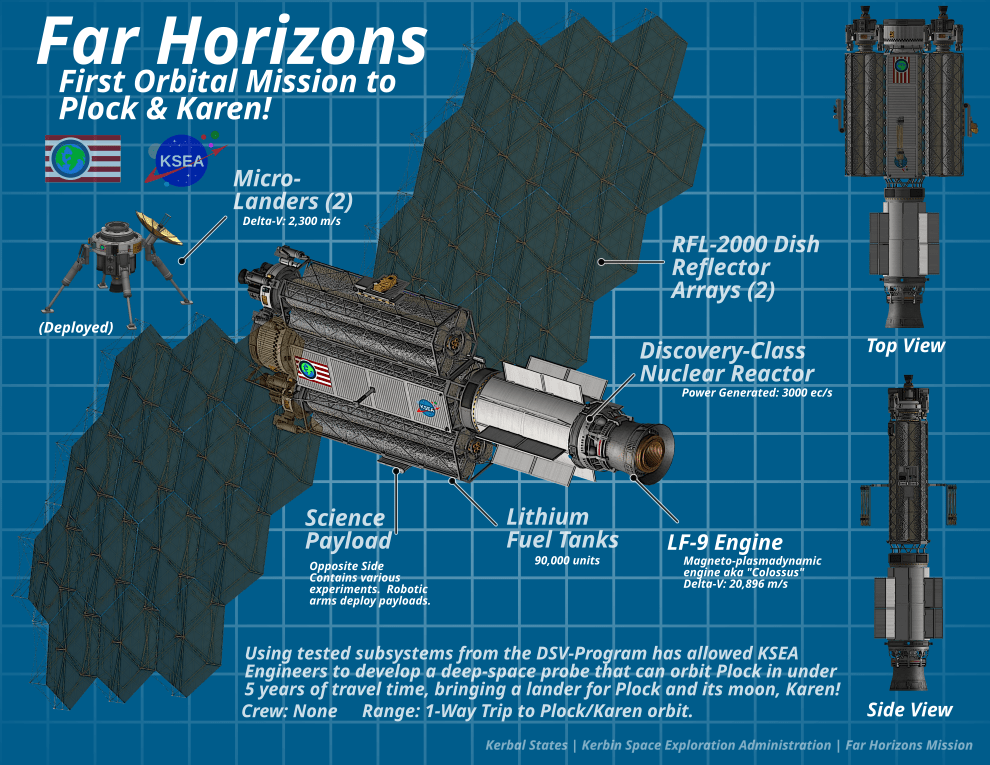
Undeterred by recent setbacks, KSEA is excited to announce a new mission – Far Horizons – the first orbital mission to Plock and Karen! Set to launch on a massive Nova Rockets, the mission represents both the most distant and most difficult challenge to date!
Plock and it’s moon Karen are so distant that the KSEA’s Deep Space Relay Network couldn’t reach it on it’s own – so Far Horizons will be equipped with an unprecedented 11 RA-100 Relay Antennas!
The design utilizes multiple subsystems from the Deep Space Vehicle Program – notably the Discovery Class Nuclear Reactor that has been powering the DSV fleet since DSV-2 Discovery! The reactor is required both for the massive amounts of energy required for the Magenetoplasmadynamic engine (aka the Colossus, first used on DSV-3 Horizon) as well as the long term power needs of the communication relay systems.
Far Horizons will consist of 3 distinct phases:
Orbit Plock: Far Horizons will first orbit Plock, deploying it’s micro lander. While in orbit Far Horizons will use onboard systems to scan and image the surface! If the lander is successful, crews will then determine if another probe should land on Plock, or if phase two should commence!
Orbit Karen: If it is determined the second lander should be deployed at Karen, Far Horizons will transit to Karen orbit, deploying it’s second micro-lander to the surface. Orbital science and surface imagine will also be conducted!
Once both Plock and Karen have been scanned and imaged to the extent that mission coordinators are satisfied, the spacecraft will transition to it’s final phase, serving as an ultra-deep space extension to the Deep Space Relay Network, allowing ongoing communications to Kerbin with all hardware deployed in the Plock system!
Construction has begun on both the rocket and the payload at the VAB – construction will take 92 days and should be complete by the end of Year 22!
Sarnus Station is finally complete, and it’s rolled out just in time to launch on the first day of Year 22!
“What a fun way to start the new year!” -Samner, Viewing the launch from Mission Control
The Nova Rocket, KSEA’s most powerful heavy lifter, carries the station into space!
Most Kerbals around the Space Center will typically stop what they’re working on, and gather to watch Nova launches – the massive rockets are quite the sight to see, and launch very rarely!
The second stage separates, as the first stage heads back to a fiery reentry into Kerbin’s oceans! At a 2000 km apogee, the station circularizes!
“We’re showing all systems nominal. Let’s send the signal to start up the reactor.” -Gene, at Mission Control
The nuclear reactor starts up – and the boards all show green!
“Reactor at full output – I think we’re OK to go!” -Glenica, at the Science Station at Mission Control
The DSV-class engine fires… and alarm bells go off!
“That thing isn’t getting enough cooling! Let’s power it down to 50 percent power… otherwise it might explode!” -Glenica
The engine is cooled down, but engineers start scratching notes in their design books for the next Sarnus-bound rocket to use this design!
Sarnus Station speeds toward Sarnus… it will arrive in just over 3 years! Once in orbit, crews from visiting DSV’s will have a home to rest at when exploring around Sarnus!
“These nuclear engines have really opened up the solar system to exploration – a trip to Sarnus in just 3 years! Who would have thought it possible!” -Edan
Blueprints have been released for Sarnus Station, a new deep space research station to be placed in orbit of Sarnus! The station will be launched aboard one of the ultra-heavy Nova Rockets, and carried to Sarnus by a modified DSV class nuclear drive! Once at Sarnus the same nuclear reactor will provide the station with ongoing power. The new Life Support Cargo Modules add a significant amount of mass to the station, however they will hold up to 60 years of life support materials for a crew of 3!
“This is the first step to letting us conduct serious investigation of the Sarnus planetary system! Future expansions will eventually grow the station, and it may even be moved into a different orbit, depending on what we need in future years!” -Gene, at Mission Control
The massive Nova-1 Rocket is rolled out to the launchpad, carrying the most expensive, and most capable spacecraft KSEA has ever built – DSV-3 Horizon!
Horizon has been under construction for much longer than anticipated, as engineers and scientists kept adding new technologies and features to the spacecraft, slowing down it’s completion!
“Well – it’s finally done! Let’s see how it flies!” -Gene
The plume from the rockets almost reach the space center!
Slowly, the Nova-1 carries Horizon higher and higher…
Eventually escaping Kerbin’s atmosphere!
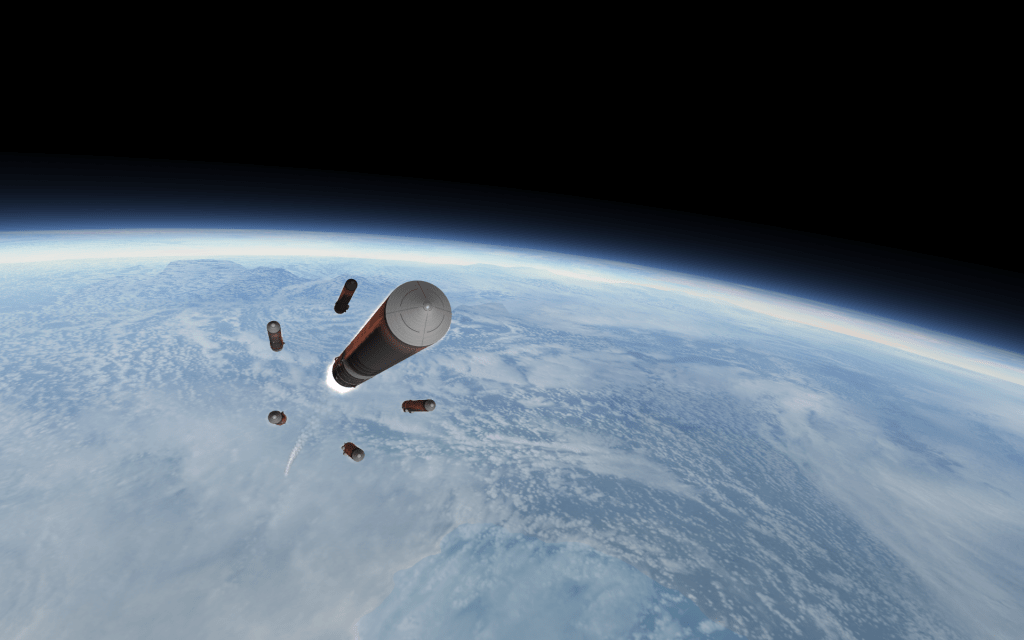
Next, the 6 solid rockets eject!
“Solid rocket ejection is complete – rockets are clear of the spacecraft!” -Sean, at Mission Control
The core of the Nova-1 carries Horizon to it’s 800k orbit, running out of fuel in the orbital stage just in time!
Finally, the fairing deploys, and Horizon is free!
“All instruments show Horizon is intact… systems slowly coming online… main antenna dish has deployed successfully!” -Kimmy, at Mission Control
Horizon sits in orbit, waiting for it’s crew!
“Good job everyone! Let’s get our crew together!” -Gene
KSEA is excited to announce the final design for Horizon! Building upon the successes of DSV-2 Discovery, the Horizon is the largest, most advanced spacecraft ever – and will be launched on a new rocket designed just for it, the Nova Rocket… The largest rocket ever launched!
The most striking new feature of Horizon is the massive cargo bay allowing a variety of payloads to travel with the spacecraft!
Construction will be completed soon, and even more exciting, should be done in time for the launch window to Sarnus!
The crew will be announced soon, as will the mission specifics!











 Kerbal States | Kerbin Space Exploration Administration