Mission Control is excited to announce the next Aurora mission – Aurora 29! This will be the first test of multiple new systems:
Neidon 6 Rocket will be equipped with Sarnus-class Solid Rocket boosters.
This will be the first test of the new VINCENT lander.
Summer, Gilian, and Edan are all training for the mission which will launch in about a week. The mission is considered to have moderate risk, however safety systems such as the well-tested Launch Escape system should balance out any risk testing Solid Rockets on a new platform.
Crew Vehicle 5 will take three Kerbals to Mun and back using a newly developed Crew Vehicle Munar Transfer Stage, designed to provide about 1000 d/v once launched to a 100k Kerbin Orbit.
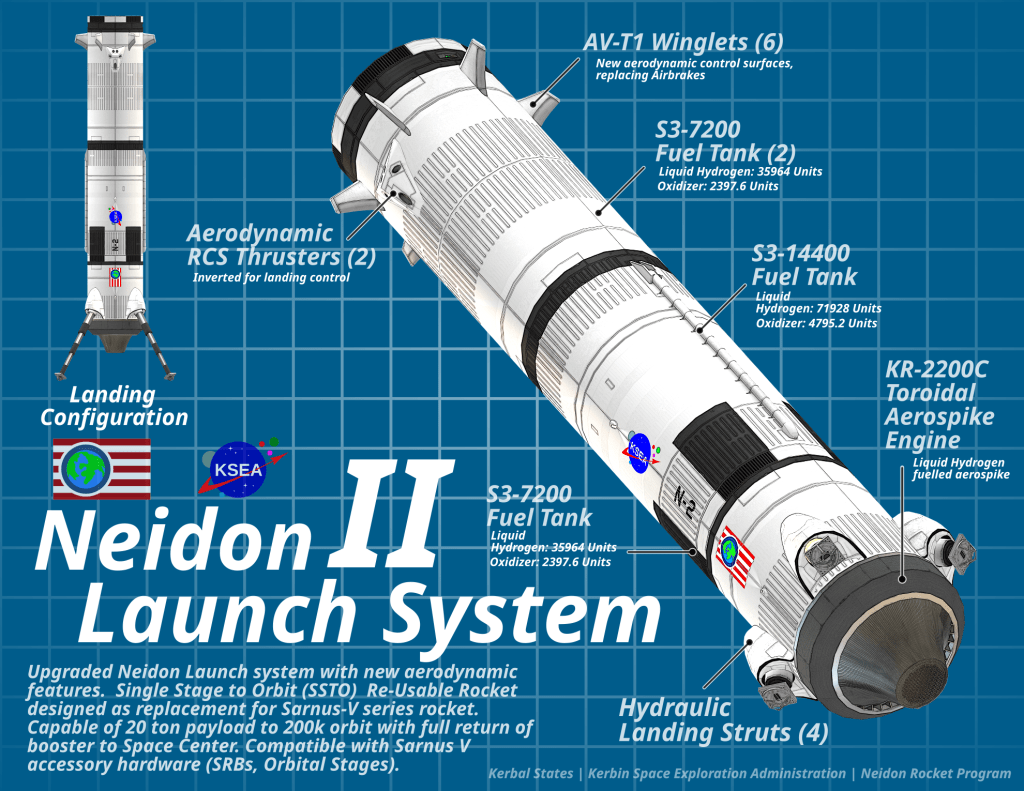
Engineers are excited to announce upgrades for the new Neidon Rocket Launch System – the Neidon II!
While the core rocket booster remains unchanged, several important changes have been made:
Aerodynamic Brakes have been removed
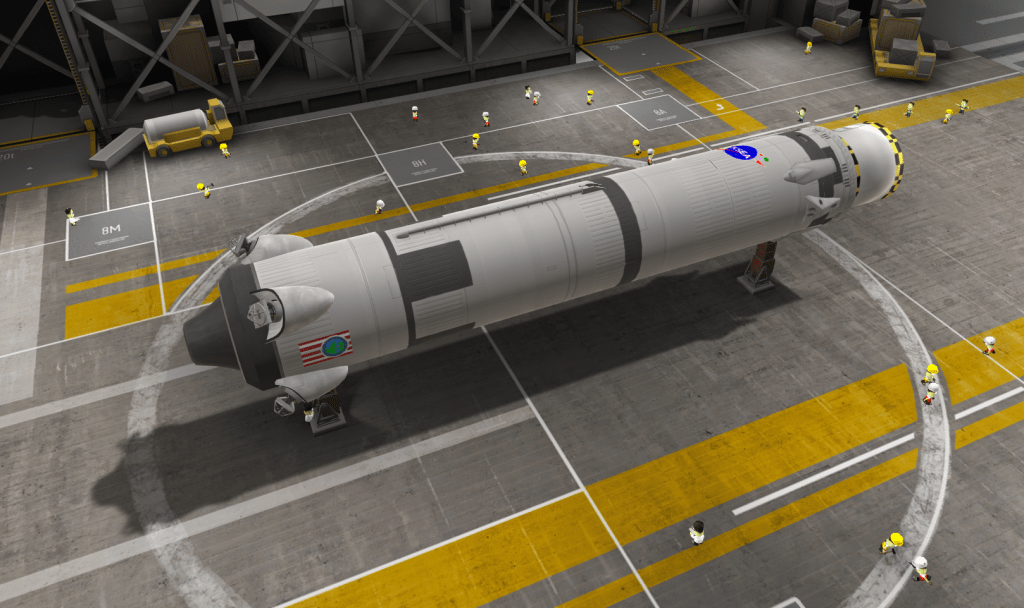
New AV-T1 Winglets have been added to deal with minor instability that occurs during transition from supersonic to subsonic.
Analysis showed that the shape of the RCS boosters at the top of the rocket was better served being flipped, so RCS thruster assemblies were inverted.
Rocket numbering changed from “X” to “N” – in blueprint shown as “N-2” for Neidon Booster 2.
Rockets have been given a fresh coat of paint, with flag and KSEA logos moved.
Besides structural changes, the Neidon Rocket will now have the bottom S3-7200 Fuel Tank prioritized as the “landing tank”. This will move the center of mass for the booster further to the bottom, assisting in re-entry!
“The plan is to test the booster with the upcoming MPV Probe, if everything is good we’ll upgrade the other boosters!” -Gillian, supervising upgrades at the VAB
The Power and Lighting module for Aurora Base is fitted to a Neidon rocket!
“Let’s hope this module does the trick… there are some pretty cold nights on Mun and the power situation up there is getting critical!” -Gene, at Mission Control
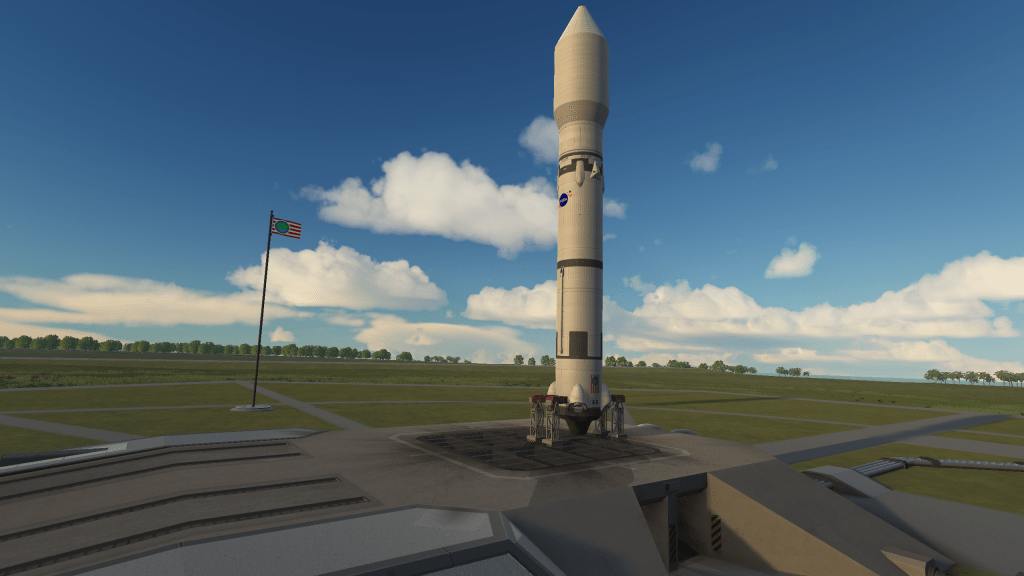
The rocket blasts off!
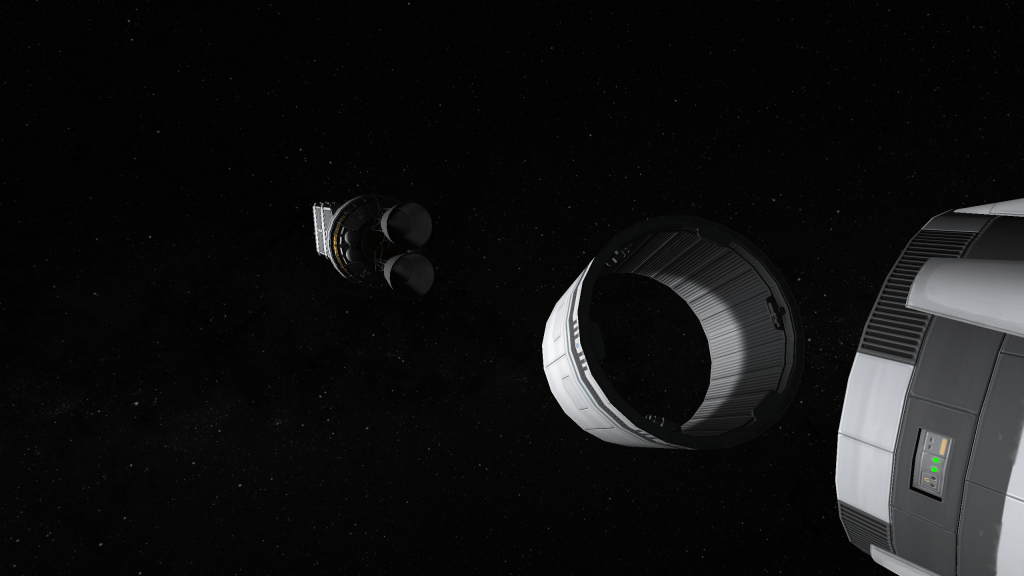
The second stage separates, and moves free from the booster….
… while the rocket turns around to re-enter the atmosphere!
“Telemetry is good… the booster is on course…” -Gillian
The re-entry is easily visible from the ground as the Neidon booster hurtles toward the VAB!
“Wow! It’s coming down almost on top of the Space Center! I hope it doesn’t land on anything too expensive!” -Gillian
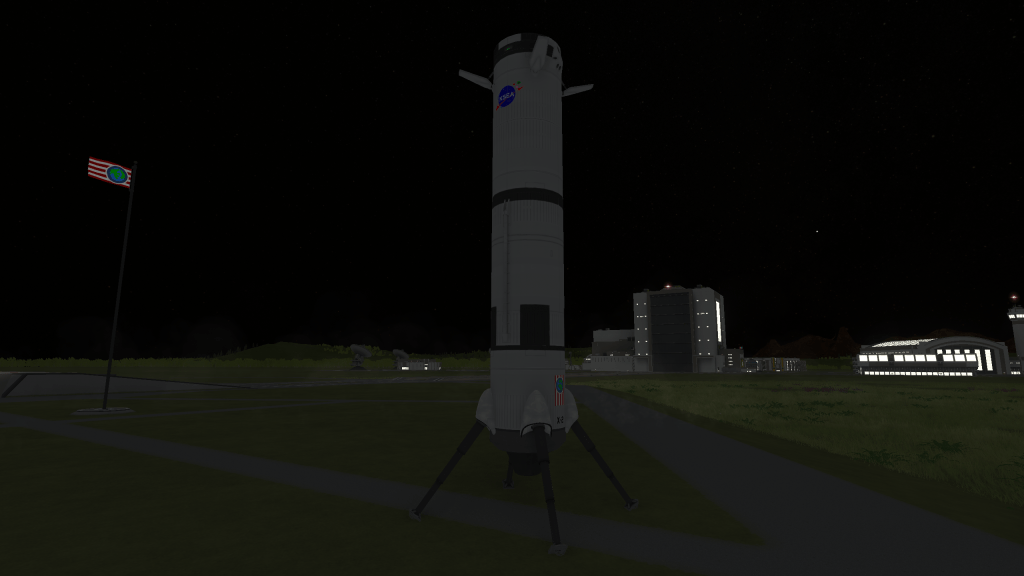
Thankfully, the booster lands right next to the flagpole – avoiding any costly explosions!
“This is our best landing yet – well done people!” -Gene, at Mission Control
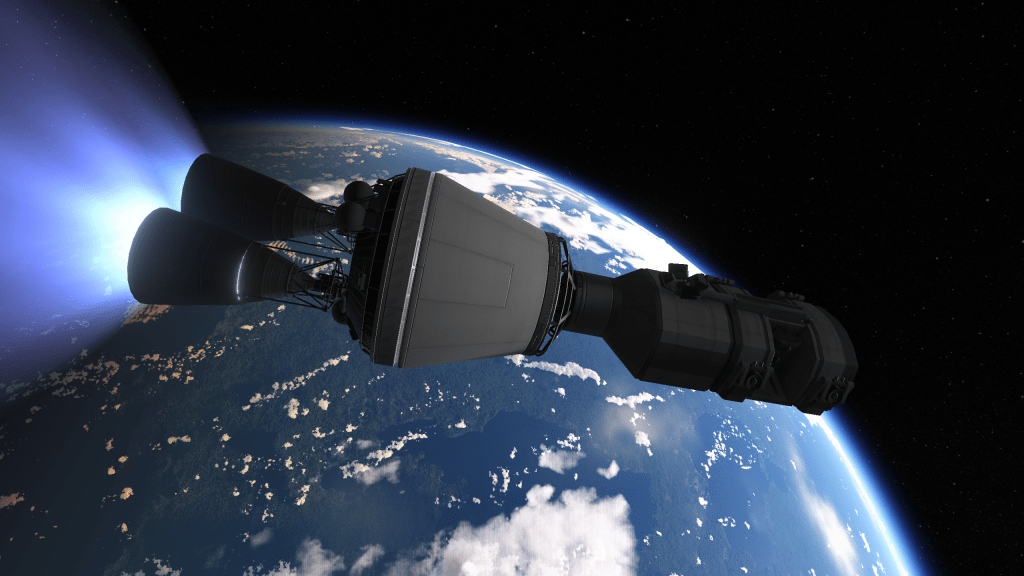
Meanwhile, in a 200k orbit of Kerbin the Light and Power module begins its short journey to Mun!
Once captured into Mun orbit, the module begins its descent!
The Munar transfer stage separates, and the expansion begins its pre-programmed descent to the Mun’s surface!
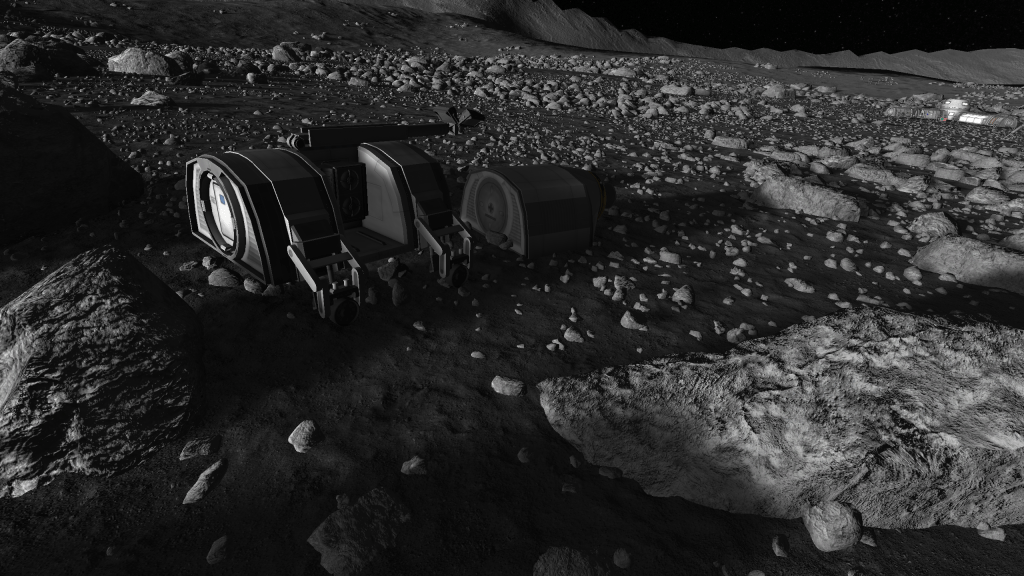
“Mission Control! I can see the module from here – looks like a good landing! The descent stage has ejected, and we have remote control of the module!” -Dunwin
Dunwin carefully drives the module remotely from the base, while Bill, Luly, and Orlas watch on!
“Mind the Mun Rocks Dunwin!” -Orlas, at Aurora Base
“I’ve got it, I’ve got it!” -Dunwin
Dunwin carefully drives the module into place, until….
… a series of loud whirs and clunks signal the automatic docking mechanisms have engaged!
“You did it Dunwin!” -Luly
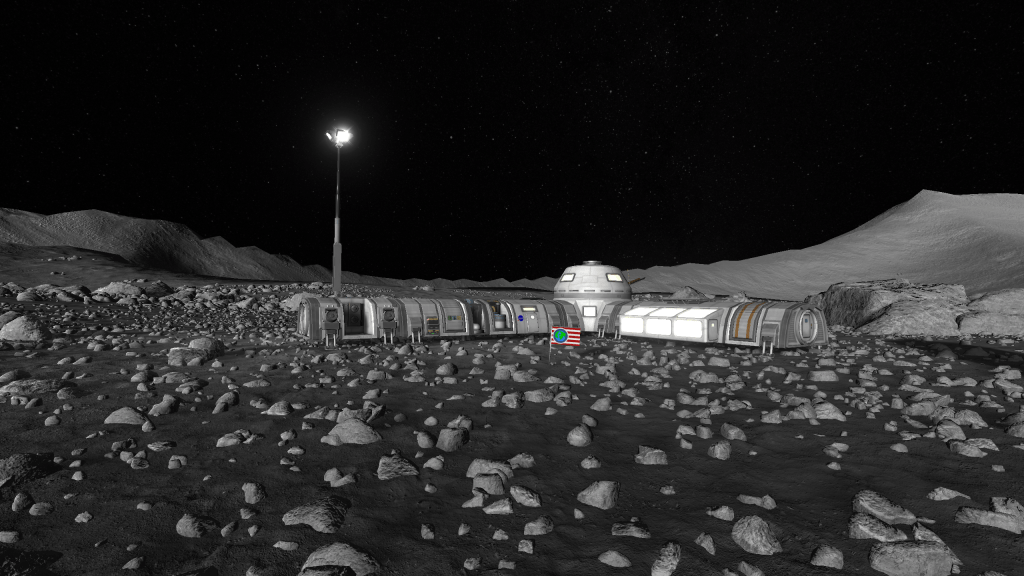
“Confirmed! The RTGs are providing a good flow of energy to the base battery banks, and the lighting system is even working!” -Bill
With that, everyone breathes a big sigh of relief! The power troubles at Aurora Base have been a persistent irritation!
“Nice job people! We saw a problem and we got it fixed! The entire purpose of Aurora Base is to test hardware for future ground bases on other worlds – and now we know a little more!” -Gene, at Mission Control
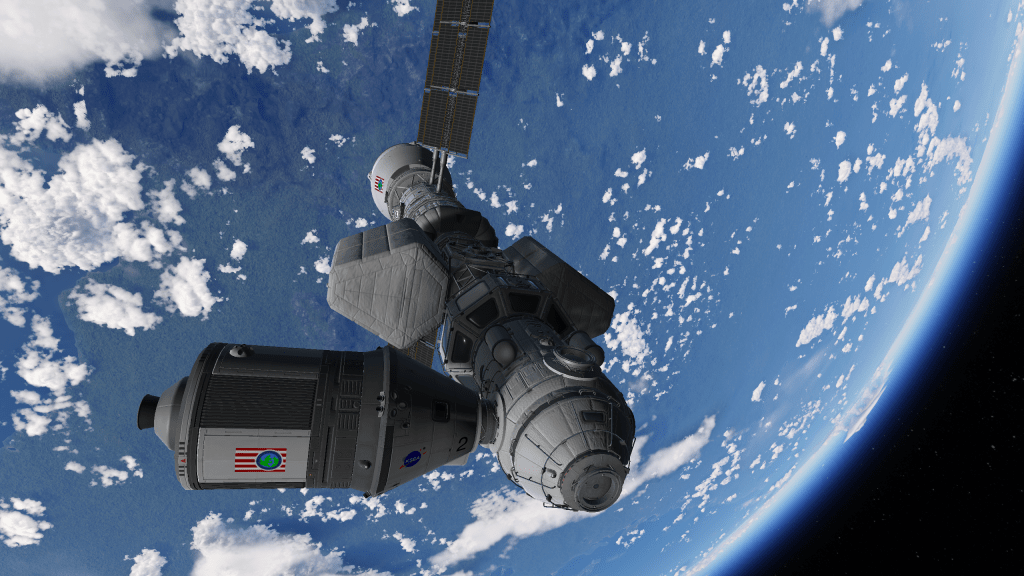
Crew Vehicle 2 is blasts off, carrying the first crew to the new Spacedock! Edbert will be piloting the crew to the station, while senior engineer Sean will be working with rookie engineer Pholie to bring the station online! Senior scientist Glenica is onboard to inspect the station’s science departments and make sure everything is ready for DSV arrivals!
“Remote sensors and camera systems show systems nominal up there… but I don’t want to loose science from across the Kerbol system just because we didn’t double check!” -Glenica
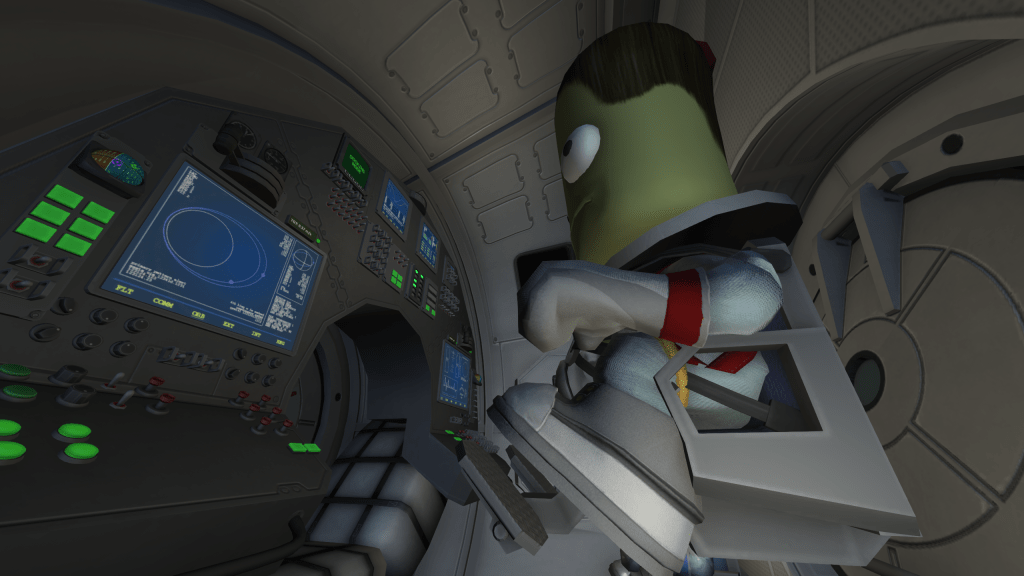
“All systems nominal… we are on track for the Spacedock! Hang on everyone, we’ll be there in no time… “ -Edbert, piloting Crew Vehicle 2
After detaching from the Neidon booster, Edbert maneuvers the spacecraft to rendezvouses with Spacedock, while the booster returns to Kerbin!
“RCS reverse thrust. Speed slowing to station-keeping. Docking systems ready…” -Edbert, piloting Crew Vehicle 2
“Station-keeping confirmed… we are lined up!” -Sean
Slowly, the spacecraft moves in to dock, until….
… a loud series of ‘clunks’ indicate they are docked!
The Neidon Rocket has entered full production, with 5 total rockets ordered. Two are being refurbished for their next launch, and the other three will be completed within a few months. To help keep track of which rocket is which, they will be labeled X-1 through X-5 !
Neidon is being devolved to be compatible with the existing Sarnus Va expansion options, including upper stage boosts and the THK Solid Fuel Boosters for heavier payloads!
“These rockets are so much easier to recover and refurbish than the Nebula Rockets… we might transition to Neidon Rockets for every Crew Vehicle launch!” -Gene, supervising recovery and refurbishment at the VAB
A new re-usable rocket prototype that will replace the current Sarnus V is under development in the VAB! The new rocket is designed to replace the Sarnus Rocket core that is used heavily in the space program!
Initially called the Sarnus VI, the project has now been determined to be such a radical shift from the Sarnus program that it deserves a new name, so the Neidon Rocket Project has several goals:
Meet or exceed current Sarnus Vb launch system (50t to 200k orbit)
Fully re-usable core rocket
Core rocket capable of single-stage to orbit of payload
Maintain compatibility with Sarnus Launch system upper stage payloads
Maintain compatibility with side stages and launch assists (solid rockets) for Sarnus Launch System.
Assess program for complete replacement of Nebula rocket system.
While the Nebula Heavy has taken some of those missions, operational complexity has made utilization a chore for Mission Control!
“That’s right – it’s finally time to retire the reliable Sarnus V! But don’t worry – you’re all going to really like the replacement. Trust me!” –Gene, answering questions at Mission Control
While the solid rocket boosters on the side of the Sarnus V (which is what makes it a Sarnus Va) are partially reusable, the center core (and most expensive component) of the Sarnus launch system is entirely lost.
A “would be nice” goal is to allow payload returns from orbit, something KSEA hasn’t been able to achieve since the Heavy Shuttles were retired.
“Maybe it’s satellite we need to bring back for repairs, or an interesting rock that won’t fit in any of our standard “rock collection” bags! Either way we’re gonna need some kind of cargo bay to protect whatever during reentry!” -Gillian
Construction on the prototype should be complete in 30 days!












 Kerbal States | Kerbin Space Exploration Administration