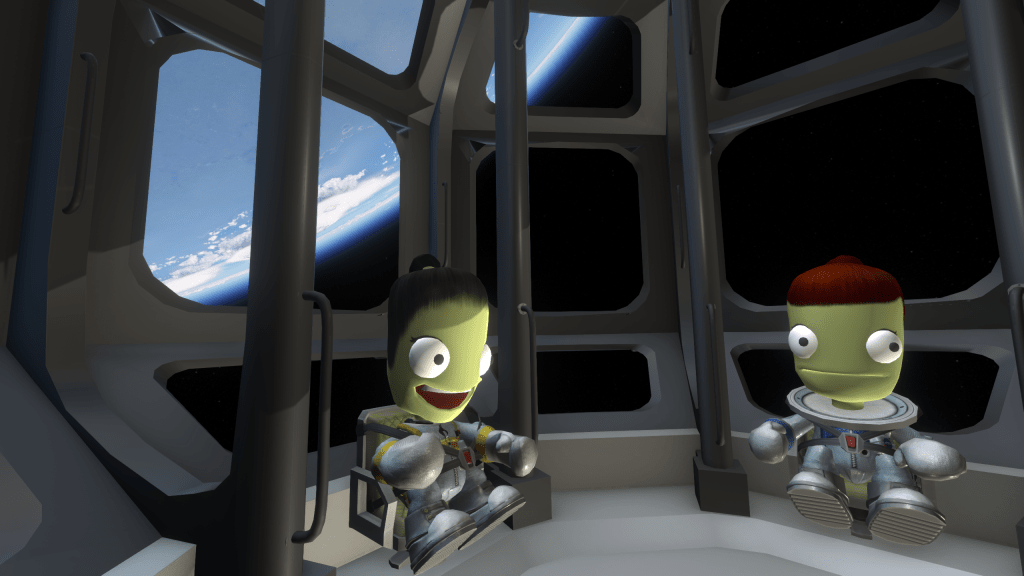
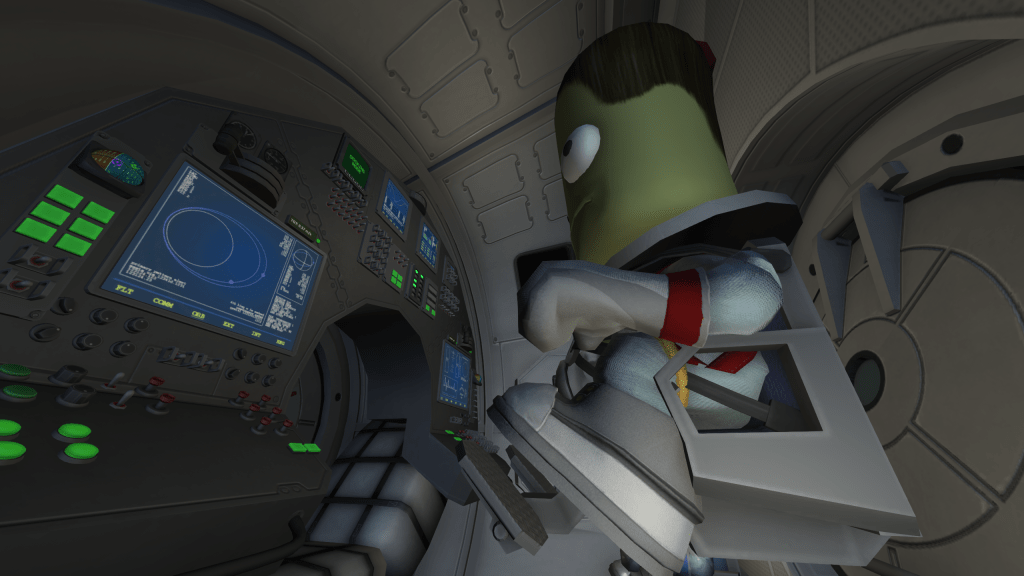
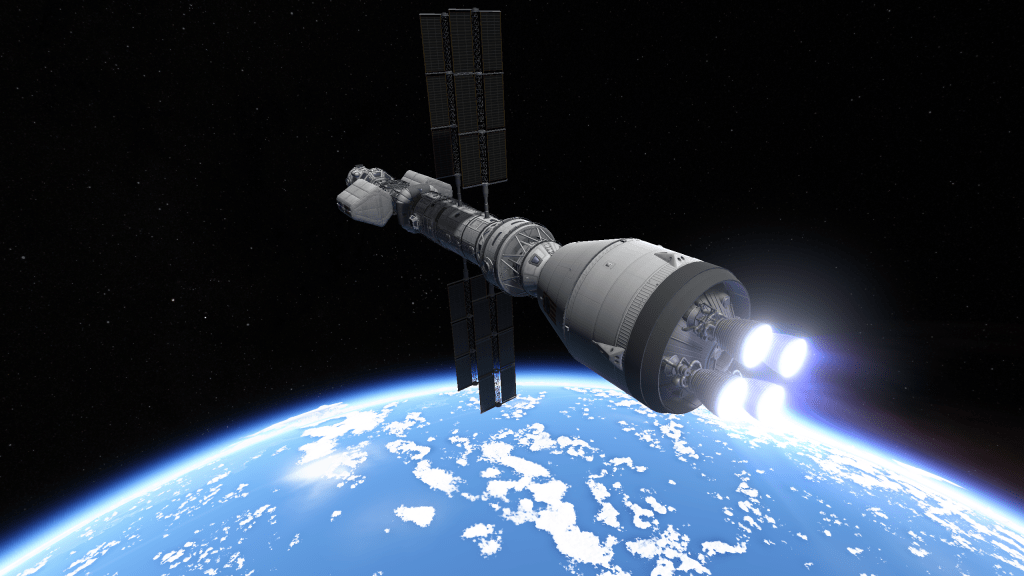
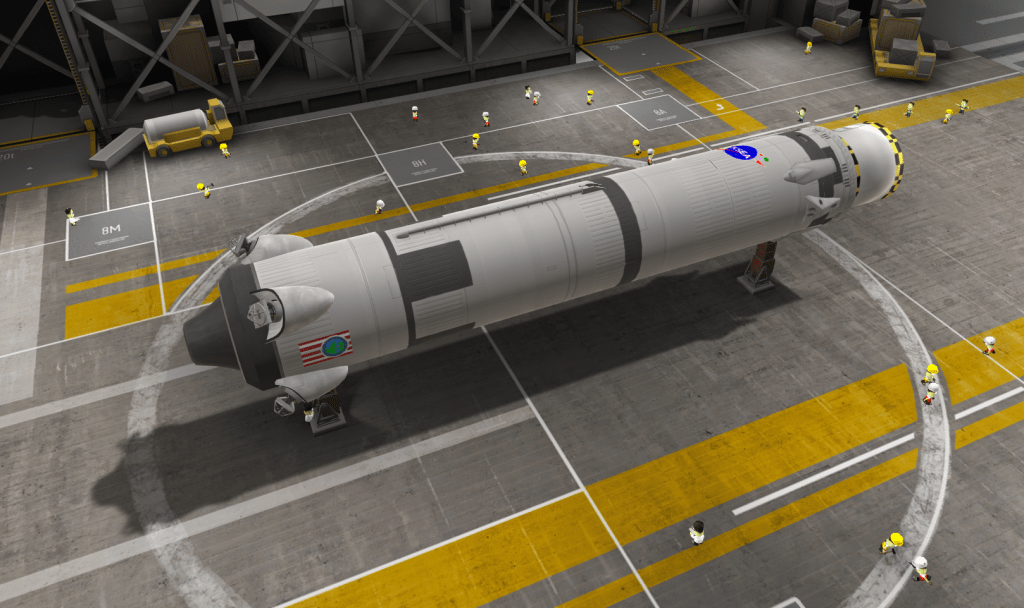
Crew Vehicle 2 is blasts off, carrying the first crew to the new Spacedock! Edbert will be piloting the crew to the station, while senior engineer Sean will be working with rookie engineer Pholie to bring the station online! Senior scientist Glenica is onboard to inspect the station’s science departments and make sure everything is ready for DSV arrivals!
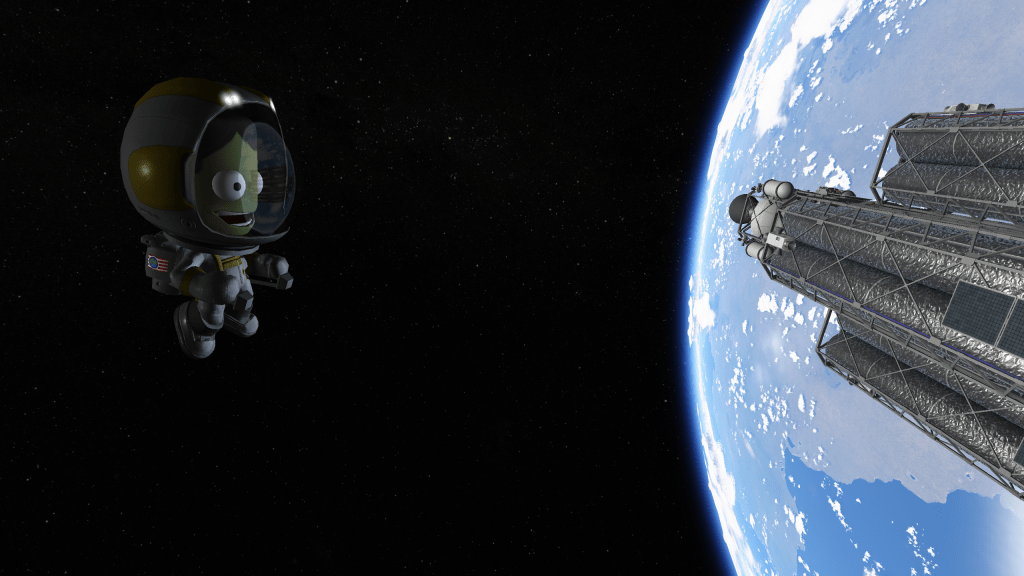
“Remote sensors and camera systems show systems nominal up there… but I don’t want to loose science from across the Kerbol system just because we didn’t double check!” -Glenica
“All systems nominal… we are on track for the Spacedock! Hang on everyone, we’ll be there in no time… “ -Edbert, piloting Crew Vehicle 2
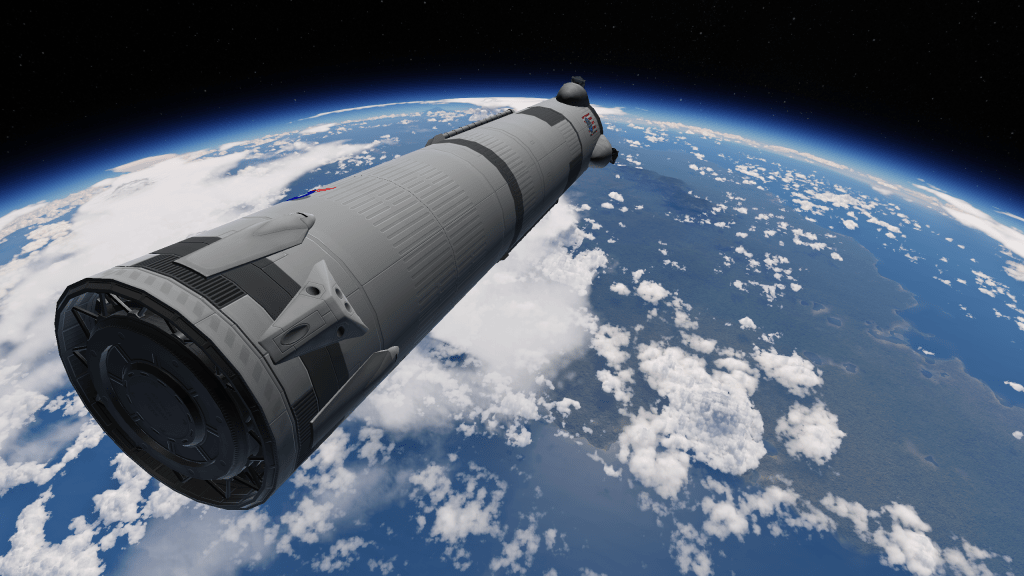
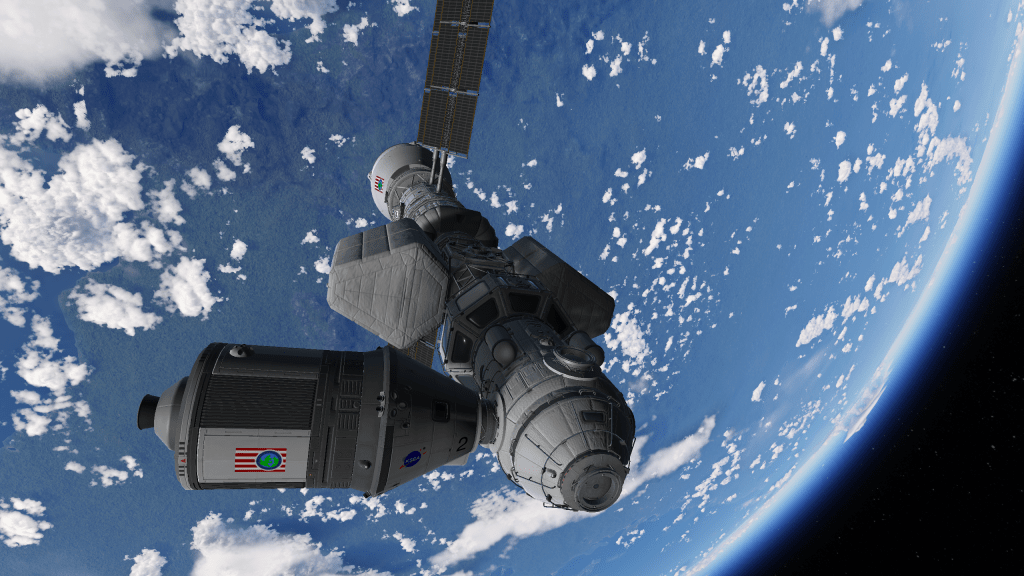
After detaching from the Neidon booster, Edbert maneuvers the spacecraft to rendezvouses with Spacedock, while the booster returns to Kerbin!
“RCS reverse thrust. Speed slowing to station-keeping. Docking systems ready…” -Edbert, piloting Crew Vehicle 2
“Station-keeping confirmed… we are lined up!” -Sean
Slowly, the spacecraft moves in to dock, until….
… a loud series of ‘clunks’ indicate they are docked!
A small payload is being prepared to expand Aurora Base on the Mun! The expansion is simply two RTG reactors to keep the base warm overnight and an exterior lighting system, but the Mun crew is really looking forward to it!
“We’re all hoping the power and lighting expansion makes nights a little brighter and less spooky! Hopefully safer too, we all keep stubbing our toes at night! “ -Dunwin
The Neidon Rocket has entered full production, with 5 total rockets ordered. Two are being refurbished for their next launch, and the other three will be completed within a few months. To help keep track of which rocket is which, they will be labeled X-1 through X-5 !
Neidon is being devolved to be compatible with the existing Sarnus Va expansion options, including upper stage boosts and the THK Solid Fuel Boosters for heavier payloads!
“These rockets are so much easier to recover and refurbish than the Nebula Rockets… we might transition to Neidon Rockets for every Crew Vehicle launch!” -Gene, supervising recovery and refurbishment at the VAB
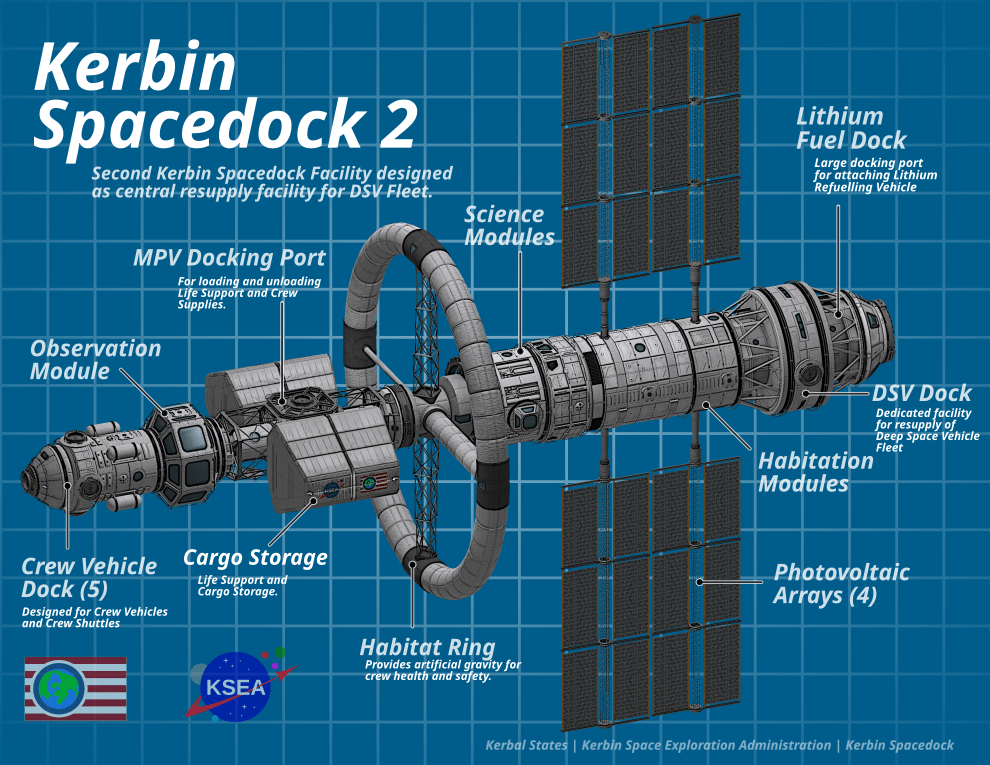
A good crowd of Kerbals gather in Mission Control to watch the launch of Spacedock 2!
“Look at it go! It is so LOUD!” -Gillian, watching from outside
The massive Nova Rocket blasts off from Mission Control – the largest (and most expensive!) launch system available to KSEA!
“Boards show a good launch – all systems nominal… watch those readings people… “ -Gene, directing the launch from Mission Control
The first stage takes the rocket up to the Station’s new altitude,100k above Kerbin….
…then separates, allowing a short second stage to finish the circularization!
Spacedock 2 should be in its final orbit, however engineers want to wait before ejecting the orbital stage just in case there are any last minute changes to the station’s final orbit!
“Let’s get that launch pad cleaned up and get a Crew Vehicle ready to launch the first Spacedock 2 crew! Should be a good first crewed launch of a Neidon Rocket too! “ -Gene
Malcolm and Sean hop into Crew Vehicle 1 and launch with a Nebula Rocket!
“Pre-Flight checks good. We are GO!” -Malcolm
The Nebula rocket blasts off!
“Wohoooooo! -Sean
The latest generation Crew Vehicle design has become the primary method of getting Kerbals to orbit and back!
“We are at 200k… detaching Booster!” -Malcolm
“Everything looks good on our boards… We have remote control of the Nebula Booster! Good luck up there crew!” -Gene, at Mission Control
Remotely piloting the craft from the surface of Kerbin, the booster does a ‘reverse burn” to allow landing closer to the Space Center!
“Malcolm, try to get us pretty close to the Fuel Depot, I’ll ned to EVA for a while to do a close inspection of both craft!” -Sean
Malcolm pilots the craft into a circular orbit, then begins the rendezvous process!
The Crew Vehicle arrives at the Fuel Depot and moves closer, and closer!
“We are stationary at 50 meters – controls are locked. You’re good to EVA!” -Malcolm
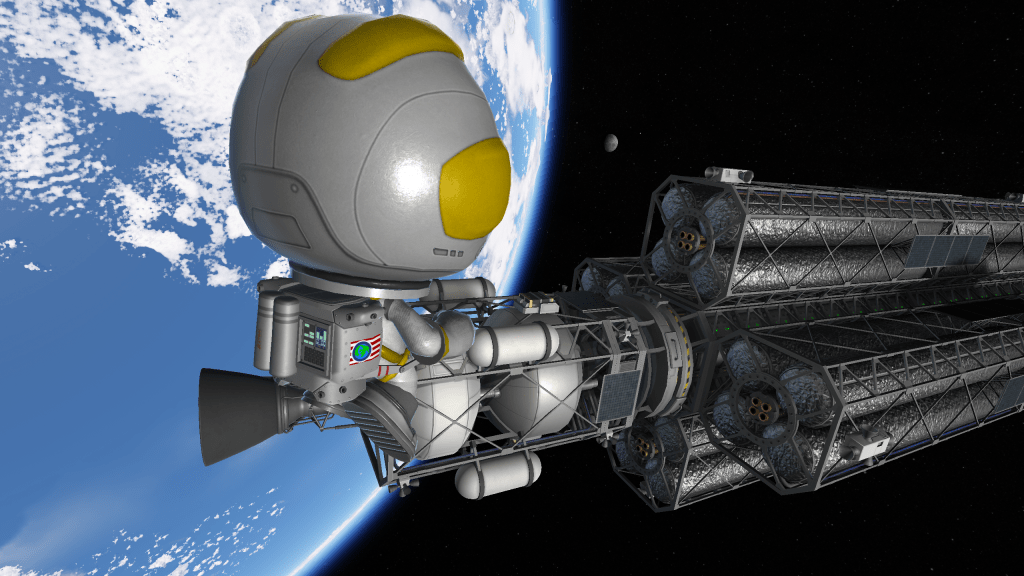
Sean suits up, and exits the craft!
“These Fuel Depots are HUGE! First impressions, everything appears good. Crazy that this is the only surviving bit of the original Spacedock!” -Sean
Doing a complete inspection Sean checks that power systems, communications are good, and most importantly the docking mechanisms are intact!
“OK… good news! Everything looks nominal. Communication systems are good… Docking port is solid and engaged. RCS systems between the two craft appear fully integrated. When Spacedock 2 launches I think we should be good to remotely control the Depot and dock it with the station!” -Sean
Completing the inspection, Sean returns to the Crew Vehicle and the spacecraft re-pressurizes its life support system, and the craft starts its descent!
“We’re heading home!” -Malcolm
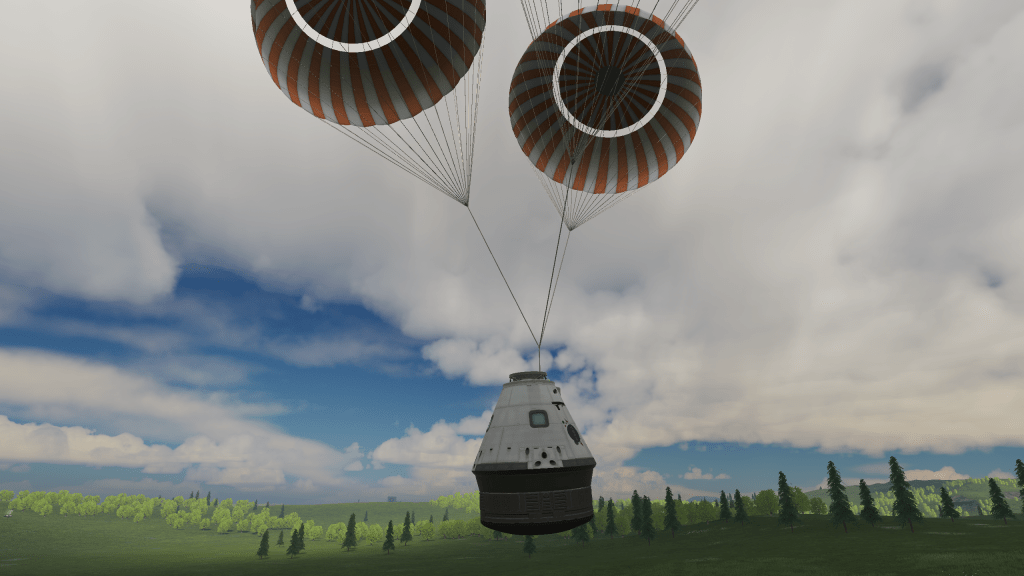
“Chutes deployed!” -Sean
Crew Vehicle 1 sets down next to the Space Center, and crews head out to do recovery!
With the upcoming launch of the new space station Spacedock 2, plans have been made to utilize the existing Lithium Fuel depot that survived the (original) Spacedock disaster! A Multi Payload Vehicle (MPV) has been configured to be a “Depot Mover” to grab the Lithum Tanks and move them to a lower orbit for the station!
“This should be a good test of the Neidon Rocket!” -Gene, at Mission Control
The Neidon Booster lifts off the launchpad!
The aerospike engine easily lifts the 20 ton payload up and out of the astmosphere…
…the fairing detaches, and the orbit is circularized!
With the MPV in a stable orbit, the booster uses its RCS thrusters to get in position, and fires its engine!
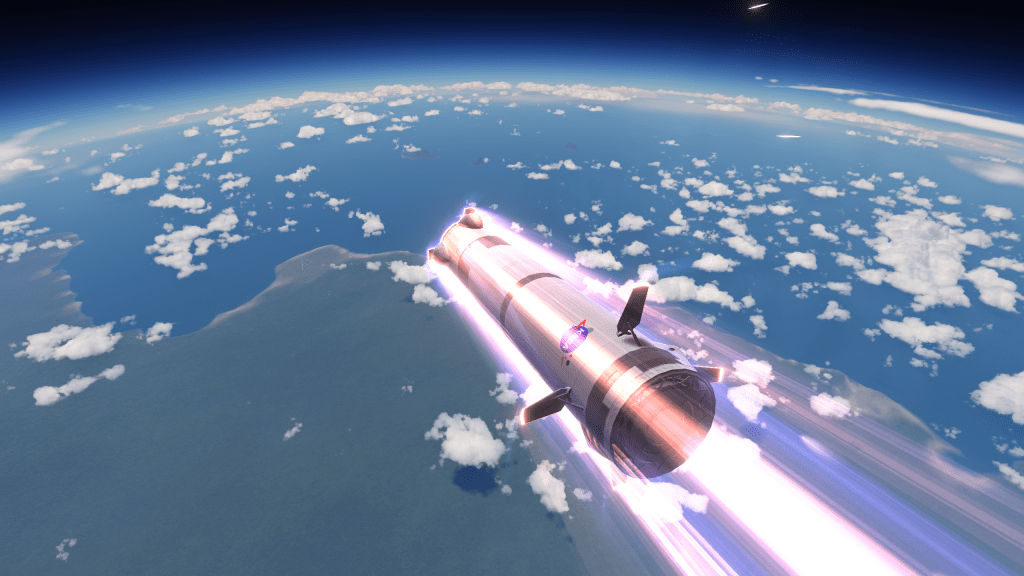
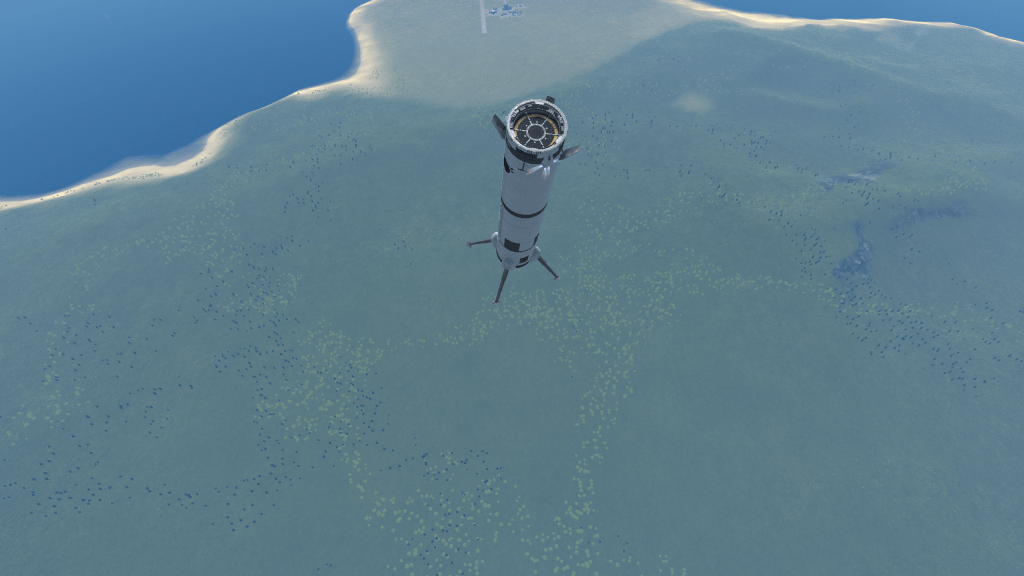
With the MPV in a stable orbit, the booster starts its descent!
“Hmm, reentry angle seems off, tracking is showing the booster landing a good deal west of the Space Center!” -Gillian, at Mission Control
“We’ll have to get some movers over there to pick it up… hope it doesn’t land on a tree! -Gene, at Mission Control
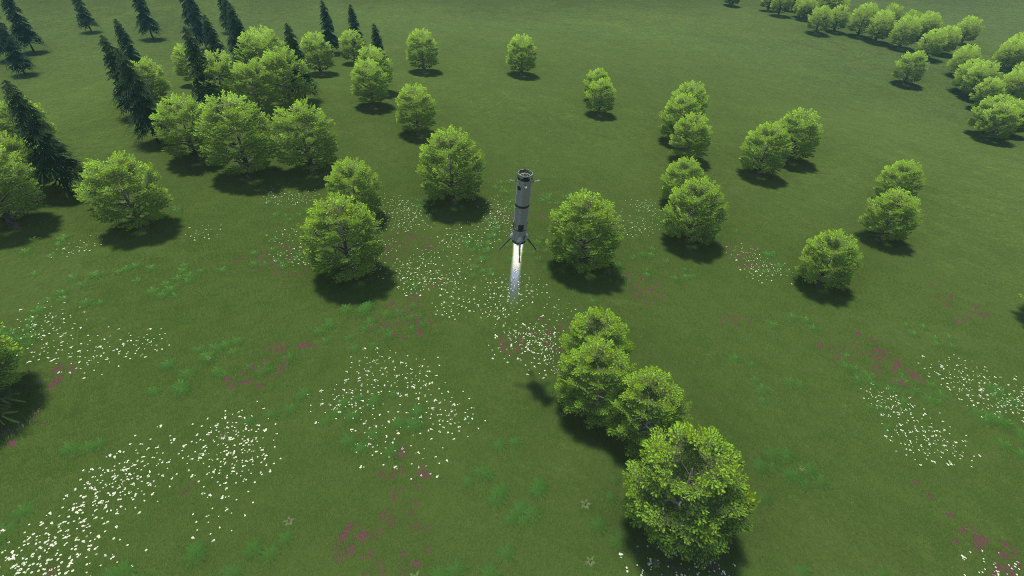
The booster’s hydraulic landing system engages, and the rocket sets down in the idyllic green woods outside the Space Center!
Touch down! The engine stops firing and the rocket is safe!
“Not quite where it should be… but it’s in one piece!” -Gillian, at Mission Control
The new Neidon Prototype is transported to the launch site! Everyone is excited to see the new Aerospike engine perform! Smaller aerospikes are already used on the Laythe Spaceplanes, however they have never been a core rocket stage before!
In Mission Control, the project lead Gillian is working with Gene on testing this new hardware!
“Fire the engines! Nice… the toroidal aerospike is working! Fuel flow – nominal… I think we are good to release the clamps and proceed with the landing test!” –Gillian
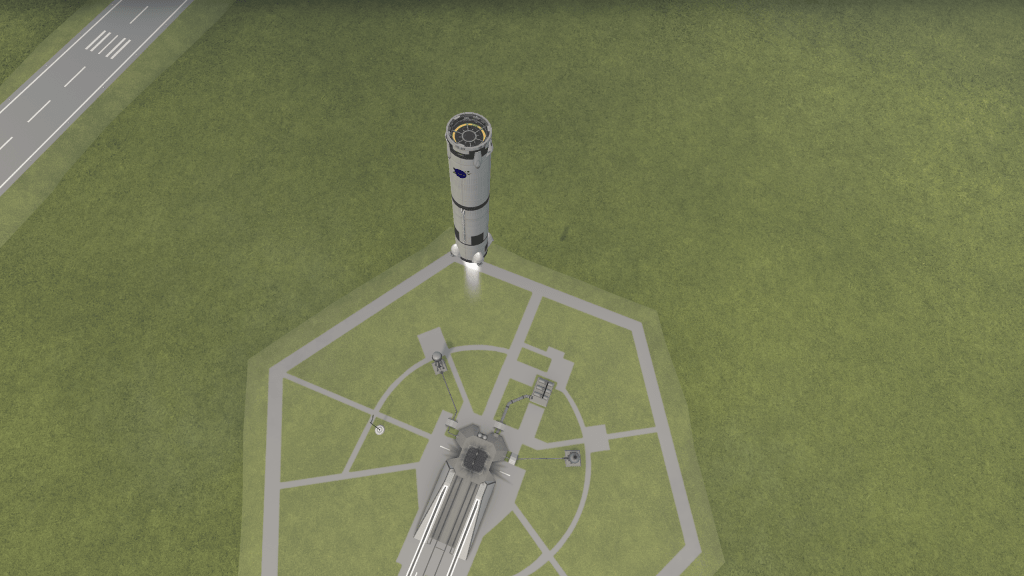
The Neidon rocket blasts off the launchpad! The prototype is only fueled with what the ‘expected’ fuel amount would be from a return from orbit!
After angling off to the south a bit, the rocket is programmed to begin its descent sequence! Air-brakes at the top of the rocket deploy….
And at the last second, the engine performs a terminal burn maneuver, firing at the last possible moment!
The hydraulic landing gear deploy and lock in place…
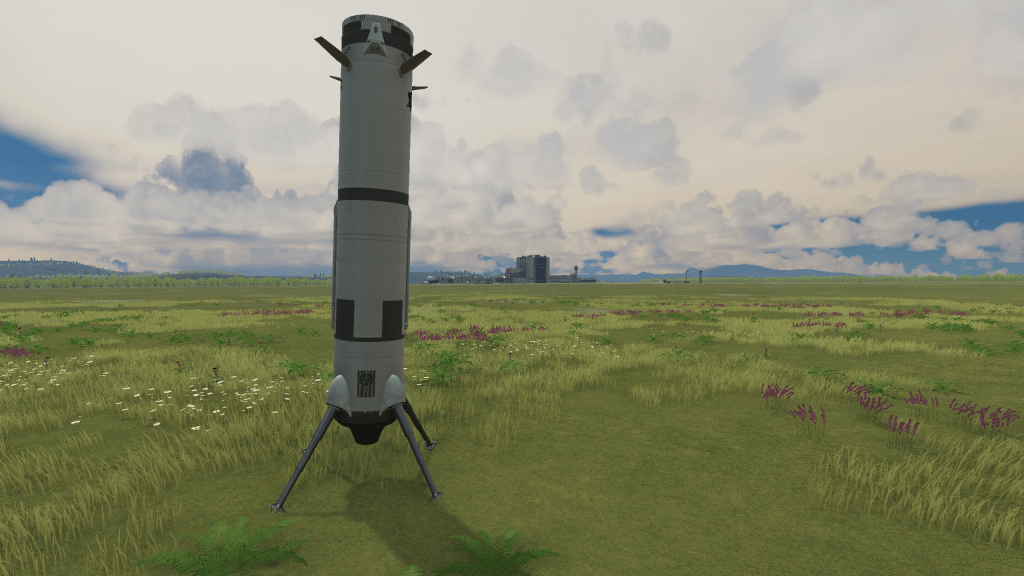
…and the rocket touches down safely!
“It worked! It worked!” –Gillian
The Kerbals cheer in Mission Control, and Gene happily exclaims:
“Congratulations team! I think we are OK to go on producing the second Neidon and scheduling an upcoming orbital payload!” -Val
A new re-usable rocket prototype that will replace the current Sarnus V is under development in the VAB! The new rocket is designed to replace the Sarnus Rocket core that is used heavily in the space program!
Initially called the Sarnus VI, the project has now been determined to be such a radical shift from the Sarnus program that it deserves a new name, so the Neidon Rocket Project has several goals:
Meet or exceed current Sarnus Vb launch system (50t to 200k orbit)
Fully re-usable core rocket
Core rocket capable of single-stage to orbit of payload
Maintain compatibility with Sarnus Launch system upper stage payloads
Maintain compatibility with side stages and launch assists (solid rockets) for Sarnus Launch System.
Assess program for complete replacement of Nebula rocket system.
While the Nebula Heavy has taken some of those missions, operational complexity has made utilization a chore for Mission Control!
“That’s right – it’s finally time to retire the reliable Sarnus V! But don’t worry – you’re all going to really like the replacement. Trust me!” –Gene, answering questions at Mission Control
While the solid rocket boosters on the side of the Sarnus V (which is what makes it a Sarnus Va) are partially reusable, the center core (and most expensive component) of the Sarnus launch system is entirely lost.
A “would be nice” goal is to allow payload returns from orbit, something KSEA hasn’t been able to achieve since the Heavy Shuttles were retired.
“Maybe it’s satellite we need to bring back for repairs, or an interesting rock that won’t fit in any of our standard “rock collection” bags! Either way we’re gonna need some kind of cargo bay to protect whatever during reentry!” -Gillian
Construction on the prototype should be complete in 30 days!
There is a lot of excitement around Mission Control – today is the day one of the most distant and difficult missions departs Kerbin!
Built using the core structure of a Horizon Class DSV, including the Discovery-Class nuclear reactor and LF-9 Engine assembly, Far Horizons’s most obvious features are the truly massive reflector arrays that allow for extremely long distance communication with the most distant planet in the Kerbol system.
“Reflector arrays show full deployment and are locked in place. Communication signal is strong and verified. Good work people!” -Gene, at Mission Control
The mission profile is fairly simple – travel to Plock, enter orbit, deploy landers, and then return to a higher orbit to allow ongoing communication with the deployed probes. Far Horizons is also equipped with mapping equipment to perform a complete study of Plock’s surface!
Engineers are already discussing a Far Horizons 2 mission which will deploy rovers to do more varied scientific studies.
Scientists believe that Far Horizons is now the fastest artificial object in the Kerbol system – traveling so fast it will reach Plock in just 5 years! At ‘normal’ travel speeds a mission to Plock would take almost 20 years.
Carson and Bob celebrate the New Year by exploring the stark, hot world of Moho! The durable rover and its life support systems keep them cool and mobile!
“Traction control on the surface looks pretty bad – I’ll see what I can do about adjusting the motors. Wish that Sondo was here – I’ll have to make some guesses on the configuration! “ -Bob
The rover works its way through the somewhat perilous terrain of the small crater, dodging around rocks, or whatever those strange shapes are! The traction adjustments seem to help, allowing the rover to brake without sliding down hills!
“You know, I like the heat, feels like I’m on an adventure! I’m getting a little light headed though….” -Carson
The lander climbs the side of the crater, navigating around the odd structures dotting the surface…
“Fascinating – previous explorations of Moho hasn’t noted these strange formations! My suspicion is these are basalt columns formed by cooled lava flows under the surface that burst up in these areas and then cooled… We should try to get some samples back to Kerbin! “ -Bob
With the sun still beating down on them, Bob climbs out of the rover and takes a sample near the strange columns!
“I wonder if the world is still volcanically active? Hopefully when we get this back to Kerbin the rest of the science team can make some sense of this! “ -Bob
“Better load those rocks up – we are going to bake if we’re out here too long!” -Carson
Carson dutifully drives the rover around the formations – aware that hitting just one the wrong way might tip the rover on its side, or worse!
“It’s hard to resist the urge to go full speed – these rovers are fun!” -Carson
“Well try ! We’re almost a thousand meters from the lander! “ -Bob
After collecting a great deal of science and surface samples, the pair head back to the lander!
Suddenly – Carson has a horrible realization that they forgot something critical!
“I just realized we forgot something! Something critical!” -Carson
“Oh no! What is it!? “ -Bob
Bob rolls his eyes as he realizes what Carson meant – the Kerbal States flag wasn’t planted when they landed!
“There we go!” -Carson
Bob configures the camera on the lander and records an image to transmit back to Kerbin – posing with “Old Kerby” for Mission Control!
The brave and somewhat forgetful Kerbals take the next few minutes gathering up all the material and science they need to take back to Kerbin… then climb back into the lander!
“Ok… hold on Bob – this new lander configuration is going to have a bit of a kick!” -Carson
The 4 small solid rockets fire, and the lander dramatically blasts off the surface!
“Ahhhhhhhhh! “ -Bob
The solid rockets fire with such force, and with the ascent angle being fairly acute, the two Kerbals see quite a bit of Moho’s surface moving quit quickly outside their window!
The small solid rockets use up their fuel and eject, and the lander uses up almost all of its fuel reaching orbit!
“Wow! That was so fun! Although, mission Control needs to think about retiring this lander. We have barely enough fuel to return to Intrepid! -Carson
“You’re right! You’re going to need to do some careful maneuvering, we have almost no margin for error in our fuel budget!“ -Bob
Carson careful fires the engine in a series of manuevers to rendevouses with the orbiting Deep Space Vehicle Intrepid!
“Look out the window Bob – we made it!” -Carson
“Yipee! Sondo, this is Bob – do you copy?“ -Bob
“Welcome back guys! Intrepid is ready for docking! I’ve activated RCS and SAS stabilization… you are go for maneuvering!” -Sondo
The lander moves closer and closer…
Until finally – connection is made! The crew is back together, and prepares for the next stage of their mission: The Voyage Home!